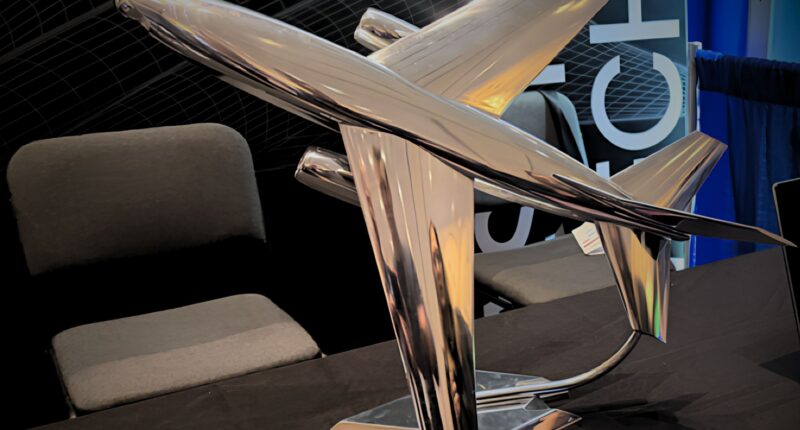
Autonomous drone uses a high-energy laser, conventional tube-and-wing airliner layout, and a kerosene-fueled turboshaft engine.
US startup Astro Mechanica is exploring an autonomous drone concept designed to carry a high-energy laser producing between 250 and 300 kilowatts.
Weighing 25,000 pounds (11,340 kilograms), the proposed aircraft uses a conventional tube-and-wing airliner layout modified for its specialized mission.
According to Aviation Week, a kerosene-fueled turboshaft engine would power generators capable of producing up to 4 megawatts of electricity.
Part of that power would drive two thrust-producing propulsion units mounted in separate pods beneath the wings.
The configuration would leave an estimated 750 kilowatts of surplus electrical power for a high-energy laser, high-power microwave system, or jammer.
The concept would also use airflow from the propulsion units to dissipate up to around 500 kilowatts of waste heat generated by the laser, helping prevent the directed-energy system from overheating.
Astro Mechanica has not disclosed the aircraft’s range, payload capacity, endurance, dimensions, or other performance specifications.
Airborne Laser Ambitions
The concept was presented at the Air Force Association’s Air, Space and Cyber conference, just weeks after the US Army began producing AeroVironment’s ground-based Locust X3 laser.


With high-energy laser systems moving into production, Astro Mechanica is exploring whether uncrewed aircraft could provide a new platform for airborne directed-energy weapons.
Andrew Van Timmeren, senior vice president of Astro Mechanica, said the proposed aircraft incorporates new developments in its propulsion system, airframe, and autonomy architecture.
The company plans to source the directed-energy system from an external supplier and has signed letters of intent with multiple laser weapon-system manufacturers.
Source: NextGen Defence
-
-
-
-
-