China and Egypt have agreed to cooperate on the local production of armed unmanned aerial vehicles (UAVs), signaling a new stage in bilateral defense ties.
The deal was formalized through a memorandum of understanding signed today between Egypt’s Arab Organization for Industrialization (AOI) and China’s NORINCO, officially known as the China North Industries Corporation.
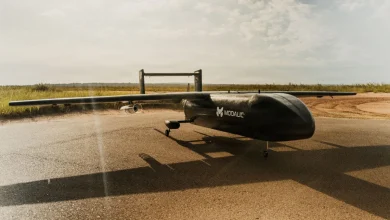
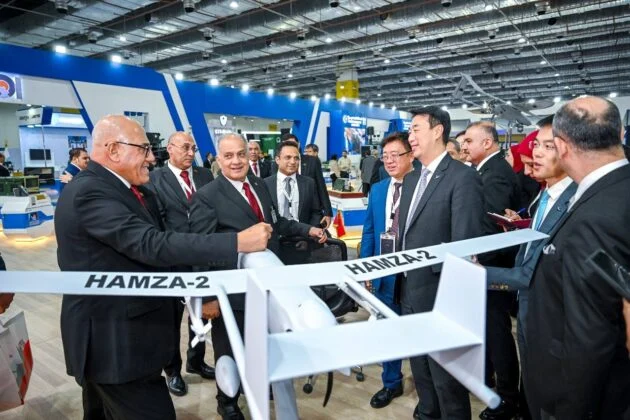
According to official reports, the signing ceremony featured the presentation of a scale model of the “Hamza-2” combat drone, equipped with guided munitions. Based on its appearance, the drone appears to be a derivative of China’s ASN-209 platform, a medium-altitude UAV with a twin-boom layout and capabilities for real-time reconnaissance and strike operations.
In a statement, AOI Chairman Major General Engineer Mokhtar Abdel Latif expressed strong support for the collaboration, highlighting its emphasis on domestic manufacturing and long-term industrial cooperation.
“We value the partnership with the Chinese company,” said Abdel Latif. “The cooperation includes localizing technology and increasing the share of local manufacturing for defense industry systems, benefiting from the advanced production capabilities of the Aircraft Factory.”

NORINCO, one of China’s largest state-owned defense conglomerates, has previously exported UAV systems to clients in Africa, the Middle East, and Asia. While the company did not release an independent statement, the event reflects China’s growing interest in deepening military-industrial links across the Global South.
The Hamza-2 drone model unveiled at the ceremony featured underwing hardpoints for carrying guided weapons, indicating an operational role beyond surveillance. The presentation suggests the drone will be co-produced with Chinese components and Egyptian assembly, possibly at the AOI’s aircraft production facilities.
The agreement comes amid Egypt’s ongoing effort to modernize its defense sector and reduce reliance on foreign imports. The inclusion of localized production terms reflects a broader policy trend within Cairo’s defense procurement strategy, focused on transferring technical knowledge and building self-sufficiency.
Egypt has previously imported Chinese aircraft, UAVs and missile systems, but this new memorandum indicates a shift toward joint development and production. It is not yet clear how many Hamza-2 drones will be built or whether Egypt intends to export the platform to third parties.