The European Commission plans to allocate unused SAFE program funds to joint defense projects with Ukrainian companies.
European Commission President Ursula von der Leyen announced this on September 16 during her address to the European Parliament.
In her speech, she outlined three areas of support for Ukraine over the winter, including strengthening air defense.
She also said that the funds remaining under the SAFE program would be used for new joint defense projects with Ukrainian companies.
“Using the funds remaining from SAFE, we will launch a new program for joint projects with Ukrainian companies,” von der Leyen said.
Meanwhile, von der Leyen did not specify how much funding would remain in the program or how much would be allocated to joint projects with Ukraine.
The European Commission president also announced the joint development with Ukraine of the FREYJA modular missile defense system.
According to her, the project is intended to combine Ukraine’s combat experience with European technologies and manufacturing capabilities.
Militarnyi previously reported that on September 11, Andrius Kubilius, European Commissioner for Defense and Space, said that funding for the Ukrainian-European FREYJA missile defense project was under consideration.
At the time, he noted that funding could come through a €90 billion loan to support Ukraine or via other EU financial instruments.
Among them, Kubilius mentioned the European Defence Industry Programme, which provides €1.5 billion.
The Freyja Project
The Freyja project was initiated by Ukraine and was elevated to the pan-European level in July during a meeting of the “Coalition of the Willing” in Paris. Ten countries are currently involved in the project.
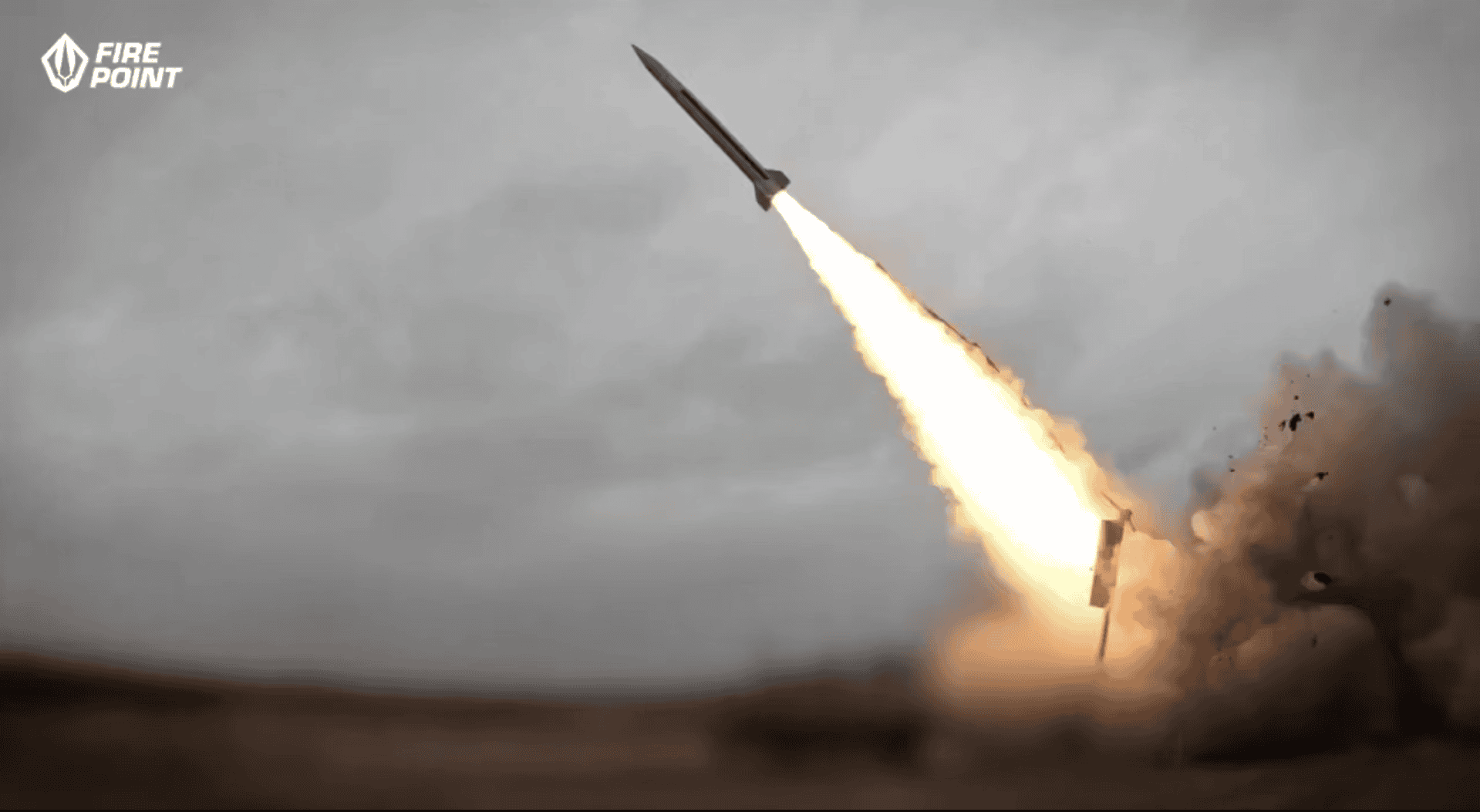
Freyja is intended to combine existing European missile defense components with a new low-cost interceptor missile being developed in Ukraine.
The companies involved in developing the system include Ukraine’s Fire Point, Norway’s Kongsberg, Switzerland’s Weibel, Sweden’s Saab, Germany’s Diehl Defence and Hensoldt, France’s Thales and Safran, Spain’s Sener, and Italy’s Leonardo.
Project participants expect to achieve the first results in 2027.
Almost all components of the FP-7 interceptor missile are manufactured in Ukraine. The only exception is one missile component that is currently sourced from abroad. This approach is expected to simplify scaling up production and reduce the project’s dependence on foreign suppliers.
Source: Militaryni