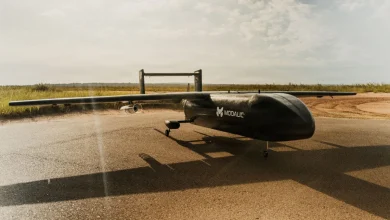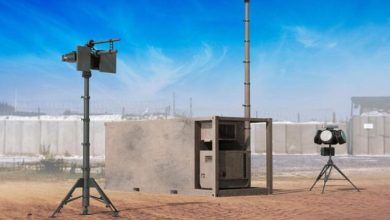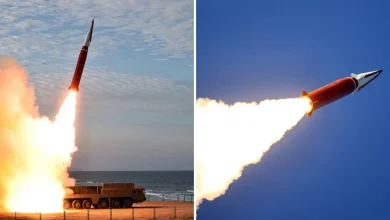
The French Army has presented a series of combat systems developed over nearly two years and shaped by lessons from Ukraine, Defence Blog reported.
Displayed at an Innovation Day in Bitche, northeastern France, the systems aim to rapidly adapt ground forces to high-intensity warfare.
Highlights included fiber-optic-guided drones, mobile fire support solutions, and adaptive vehicle protection against strike drones, all designed to quickly move tested concepts into operational use.
According to French officials, the projects draw directly on Ukrainian battlefield practices, where rapid innovation, low-cost systems, and decentralized adaptation have reshaped ground combat.
The program is supported by the Saint-Louis Institute, whose expertise in materials, sensors, and weapons allows engineers and operational units to collaborate closely, shortening development timelines and ensuring systems meet real combat needs.
According to Defence Blog, the French Army describes Ukraine as a “real-world laboratory,” providing practical insights that exercises alone cannot replicate.


The Systems
Key technologies demonstrated included the TEMARA attack drone, a first-person view platform guided by fiber-optic cable rather than radio signals, allowing operators to maintain control even in heavily jammed environments.
It features a secured firing mechanism for close-range strikes against vehicles and fortified positions.
The RIC2RIC is a small teleoperated ground robot for reconnaissance and limited engagement ahead of manned units, reducing soldier exposure in high-risk areas.
A 3D-printed anti-tank mine, the PAC 13, can be rapidly produced locally, reflecting Ukraine’s approach to adaptable, fast-manufactured munitions.
Additionally, the NTGS mobile mortar is a compact, lightweight system capable of firing six 120mm rounds in under a minute and is compatible with NATO-standard mortars.
Designed for counter-drone operations and low-signature deployment, it can be set up in less than 45 seconds.
Moreover, French Army officials reviewed modular protection for armored vehicles, noting that traditional armor is no longer sufficient and that layered, flexible solutions are needed for field adaptation.