The German Armed Forces has ordered eight MQ-9B SeaGuardian unmanned aerial systems from General Atomics to equip its navy.
The platforms will enhance the German Navy’s long-range maritime reconnaissance and anti-submarine warfare (ASW) capabilities, with initial deliveries scheduled to begin in 2028.
According to Hartpunkt, approximately 1.52 billion euros ($1.78 billion) has been allocated for the procurement, with financing drawn from special funds and the defense budget.
The contract includes spare parts and flight crew training for an initial two-year period, with the aircraft reportedly slated for upgrades to a full ASW configuration in 2031 and 2032.
To Complement P-8A Poseidon
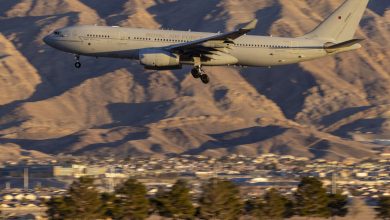
The systems will be operated by Naval Air Wing 3 “Graf Zeppelin” at Nordholz, complementing the manned Boeing P-8A Poseidon maritime patrol and anti-submarine warfare aircraft.
Germany ordered eight P-8A Poseidons in 2021 and received the first aircraft in October.
While the P-8A offers higher speed — up to 900 kilometers (559 miles) per hour — and greater sensor and weapons capacity, the MQ-9B provides significantly longer endurance.
Features
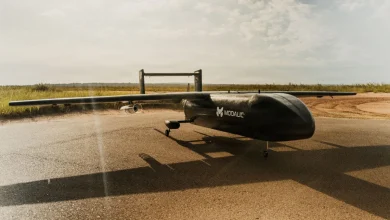
With a wingspan of 20 meters (66 feet) and a length of just 10 meters (33 feet), the MQ-9B can remain airborne for up to 30 hours, compared with roughly 10 hours for the P-8A.
The aircraft can carry payloads of up to 2,000 kilograms (4,409 pounds), including a suite of sensors such as cameras and maritime surveillance radars, as well as canisters for deploying sonar buoys to detect submarines.
Sensor data is relayed to ground control stations and can be shared with other naval aircraft, ships, and, if required, allied forces.
Preparatory Steps
The German Armed Forces noted that several preparatory steps remain ahead of the first flight operations in 2028, including crew training and construction of required infrastructure.
“The German Armed Forces benefit from the fact that other partners are already operating the MQ-9B system,” the service said.
“This allows us to draw on the experience of allied armed forces — such as the British or the Belgians — to ensure the smoothest possible start to flight operations.”