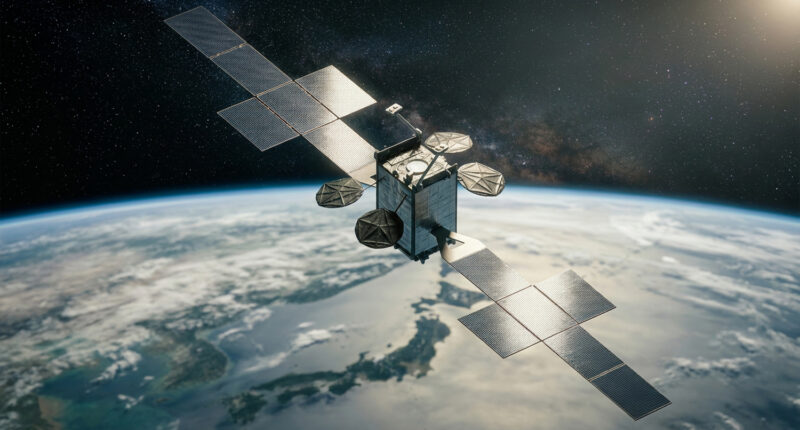
Japan’s next-gen defense satellite uses a digital communications payload with flexible beam coverage and capacity management, and operates from geostationary orbit.
Japan is raising the bar in space-based military communications, awarding Mitsubishi Electric a contract to build a next-generation defense satellite.
The satellite will feature a digital communications payload that can dynamically adjust beam coverage during missions, helping ensure critical units remain connected.
Most traditional military satellites rely on fixed coverage zones and pre-assigned bandwidth, limiting their ability to shift resources as battlefield demands evolve.

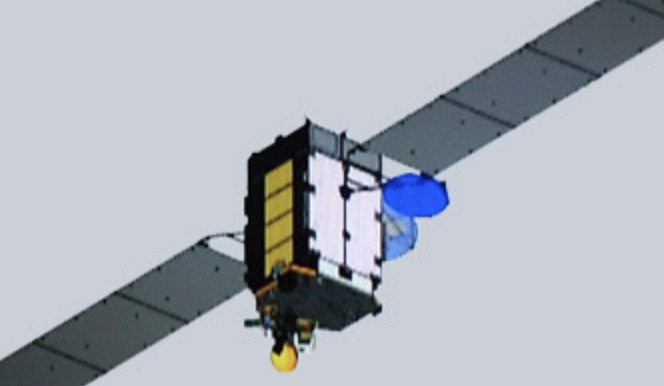
Engineered for higher resistance to interference and expanded capacity, the new satellite will leverage advanced communications technologies to support secure, high-demand operations.
Beyond the spacecraft itself, the contract also includes designing a new ground system to manage and protect data links between the satellite and users on the ground.
The space asset is set for deployment in geostationary orbit as a replacement for Kirameki-2, the X-band defense communications system currently in service.
Building Japan’s Defense Network
The contract is expected to help establish a secure defense communications network to support the Japan Ministry of Defense and Self-Defense Forces.
It also aligns with Tokyo’s Space Domain Defense Guidelines, which emphasize satellite communications a core part of military and space defense operations.
“Mitsubishi Electric is committed to strengthening Japan’s national security and defense industry base by leveraging technology for more robust deterrence,” the company stated.