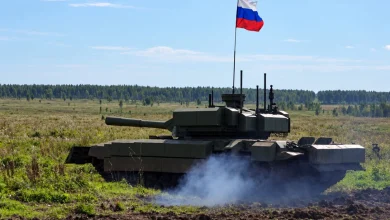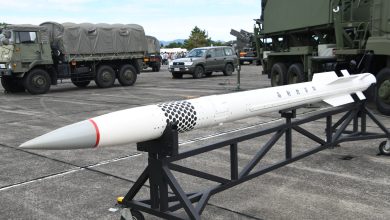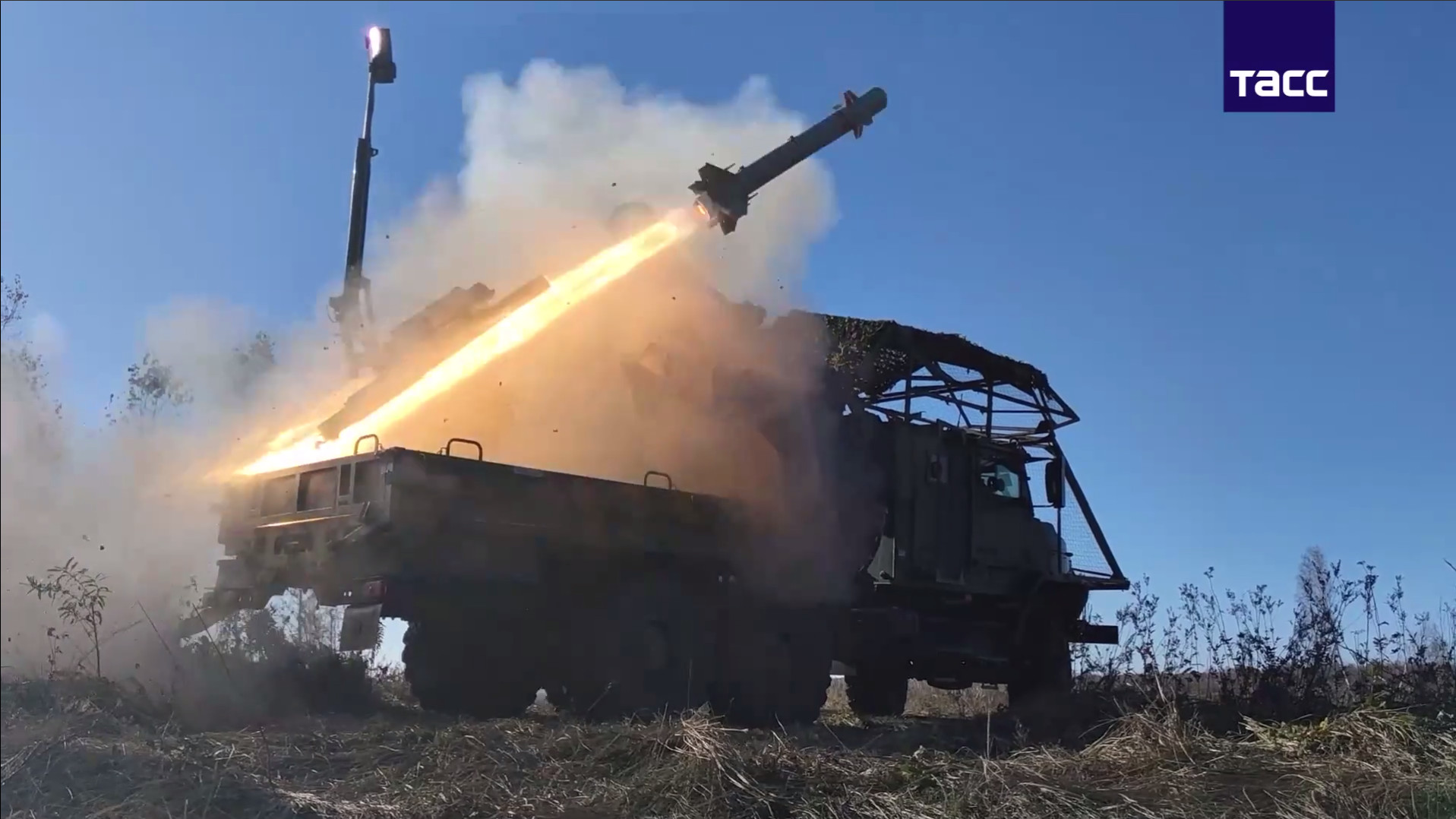
During the Center-2026 strategic command-and-staff exercises, Russia unveiled a new ground-based missile system, Izdeliye 347, which uses the LMUR light multi-purpose missile.
This was reported by the Russian news outlet RIA Novosti, citing the Ministry of Defence of the Russian Federation.
It was stated that the new system is designed for “high-precision strikes against stationary and moving targets at ranges of up to 20 km.”
“The main feature of the system is the ability for an operator to guide the missile to the target during the terminal phase of its flight path,” the Ministry of Defence of the Russian Federation stated.
Judging by the published video, an armored 6×6 Ural truck was used as the platform, with a launcher for two missiles and a mast with an antenna for communications installed in the truck bed.
During the demonstration launches, the missile struck an ‘enemy artillery position’ at a range of 13.9 km. However, the missile missed the target in an open field, landing a few meters away from it.
The LMUR is a Russian multi-purpose air-to-surface guided missile, also known as Izdeliye 305 and Kh-39. It was developed by the Kolomna Machine-Building Design Bureau Research and Production Corporation, which is part of the High-Precision Systems holding company within the Rostec Corporation.
The LMUR is carried by Mi-28NM and Ka-52M attack helicopters, as well as specialized Mi-8MNP-2 helicopters. The Russian military has been using these missiles against Ukraine since at least 2022.
The basic version of the missile is 1,945 mm long, has a casing diameter of 200 mm, and a launch weight of 105 kg. It is equipped with a solid-fuel engine that provides a flight speed of up to 230 m/s.
The stated guaranteed range of guided flight is up to 14.5 km, and the flight altitude above the surface is 100–600 m. The missile carries a 25-kg high-explosive fragmentation warhead.
The guidance system combines inertial navigation with satellite correction during the cruise phase and a thermal imaging homing head during the terminal phase. A two-way radio channel transmits images from the missile to the operator’s screen in the helicopter and control commands in the opposite direction. This allows the crew to guide the missile beyond the helicopter’s field of view and take cover behind terrain features immediately after launch.
In June 2025, Russian sources reported on a modification of the UR-305UD with a flight range increased to 25 km. It is likely that this modification formed the basis for the Izdeliye 347 system.
Source: Militartyni