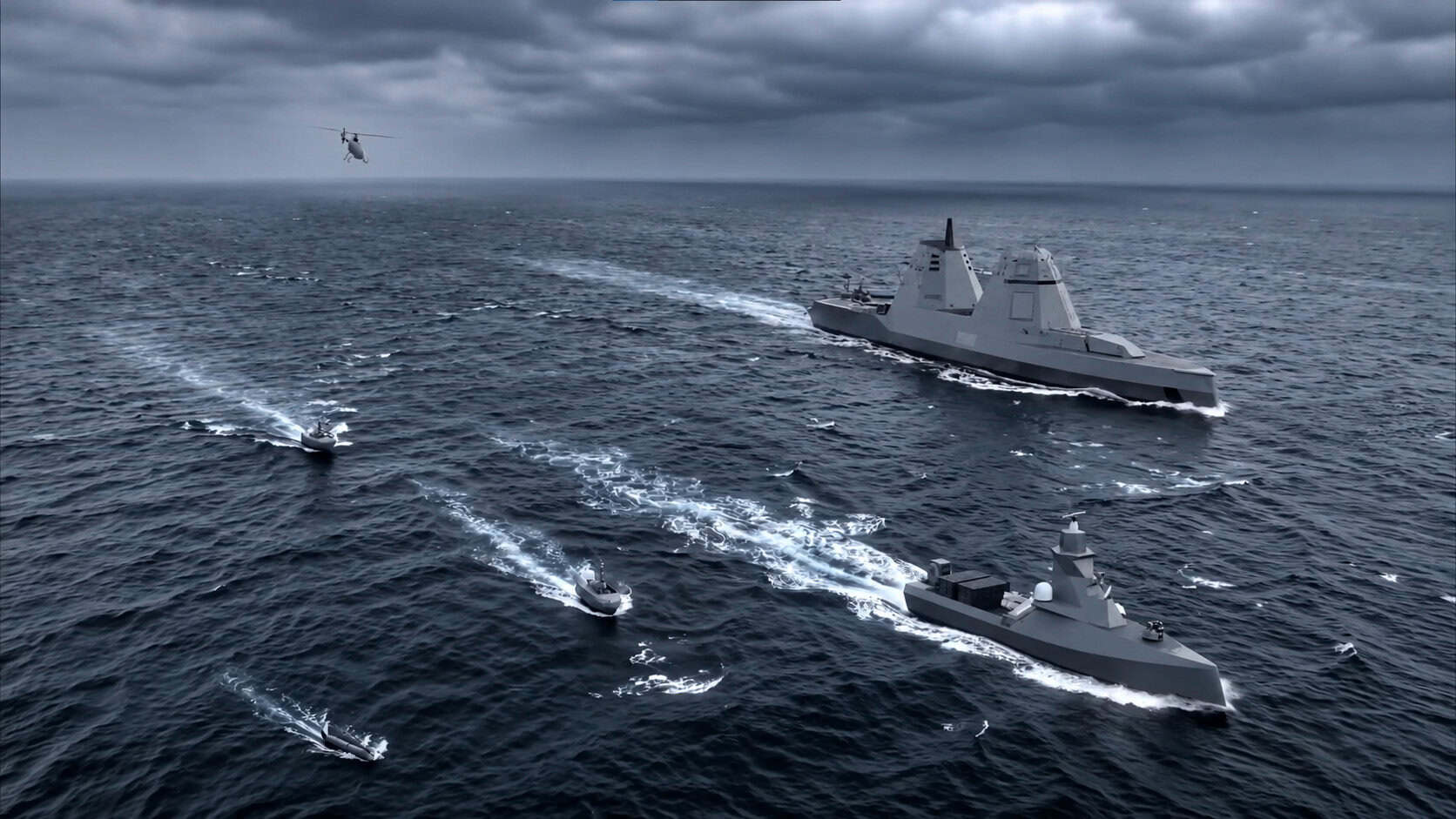
French shipbuilder Naval Group has unveiled a concept for the next-generation SCX 26 combat ship, equipped with an electromagnetic railgun, laser weapons, and over 100 vertical launch cells.
This was reported by Naval Group, which presented the design at the Euronaval 2026 international naval exhibition in Paris.
The new ship is being developed as a conceptual platform for high-intensity naval combat operations with extensive use of drones and automation systems.
According to the developers’ vision, the SCX 26 is intended to combine the functions of a missile destroyer, a drone carrier, and a command center for combat platforms in the air, on the sea surface, and underwater.
The ship will be 170 meters long, 24 meters wide, and have a displacement of approximately 8,000 metric tons. Its full displacement could reach 10,000 metric tons.
Its maximum speed is expected to be 30 knots, and its range — over 8,000 nautical miles. The design envisages for the use of a combined diesel-electric and gas turbine propulsion system (CODLAG).
One of the SCX 26’s key features will be its powerful missile armament, which will include over 100 vertical launch cells of various classes, located in the bow and stern of the ship.
In addition, the design calls for the installation of a high-rate-of-fire electromagnetic cannon, a 100-kW laser system, and two modular Rampart close-in defense launchers.
In June, Naval Group, in collaboration with the Emirati company EDGE, signed an agreement to integrate SkyKnight anti-aircraft missiles into the Rampart launch system. This system uses interchangeable ammunition modules, allowing its armament to be adapted to various types of threats, including drones, aircraft, and missiles.
At the same time, Naval Group has been developing new vertical launchers for FDI frigates since last year, which will increase the ships’ ammunition capacity through the use of more compact anti-aircraft missiles.
Drone carrier
The project has placed special emphasis on the potential applications of unmanned systems for various purposes. According to the French publication Mer et Marine, the stern section of the ship, which accounts for about one-third of its length, will be equipped with a large multifunctional compartment.
This compartment is designed for the storage, preparation, maintenance, and repair of aerial, surface, and underwater drones. The compartment will be connected to the upper flight deck by a large elevator, which will facilitate the movement of autonomous vehicles and helicopters.
The possibility of manufacturing individual drone components directly on board using 3D printing technology is also being considered. Depending on the mission, the ship will be able to adjust the composition of its unmanned systems for reconnaissance, surveillance, electronic warfare, anti-submarine operations, and the protection of naval formations.
The SCX 26’s crew will consist of approximately 150 sailors. Additionally, the ship will be able to accommodate up to 100 military personnel, including staff officers and drone operators.
According to Naval Group representative Émeric de Torsy, the prospective ship is envisioned as the central element of a combined naval task force, ensuring communication and coordination between manned and unmanned platforms.
The SCX 26 concept is geared toward the development of naval technologies with a view to the 2040s. At the same time, the company emphasizes that the presented project is a research and development initiative and does not currently entail a mandatory transition to serial production.
Naval Group is also involved in the production of the new-generation FDI frigates. Specifically, in October, the company began construction of the first frigate of this type for Sweden.
Source: Militaryni
-

-

-

-

-