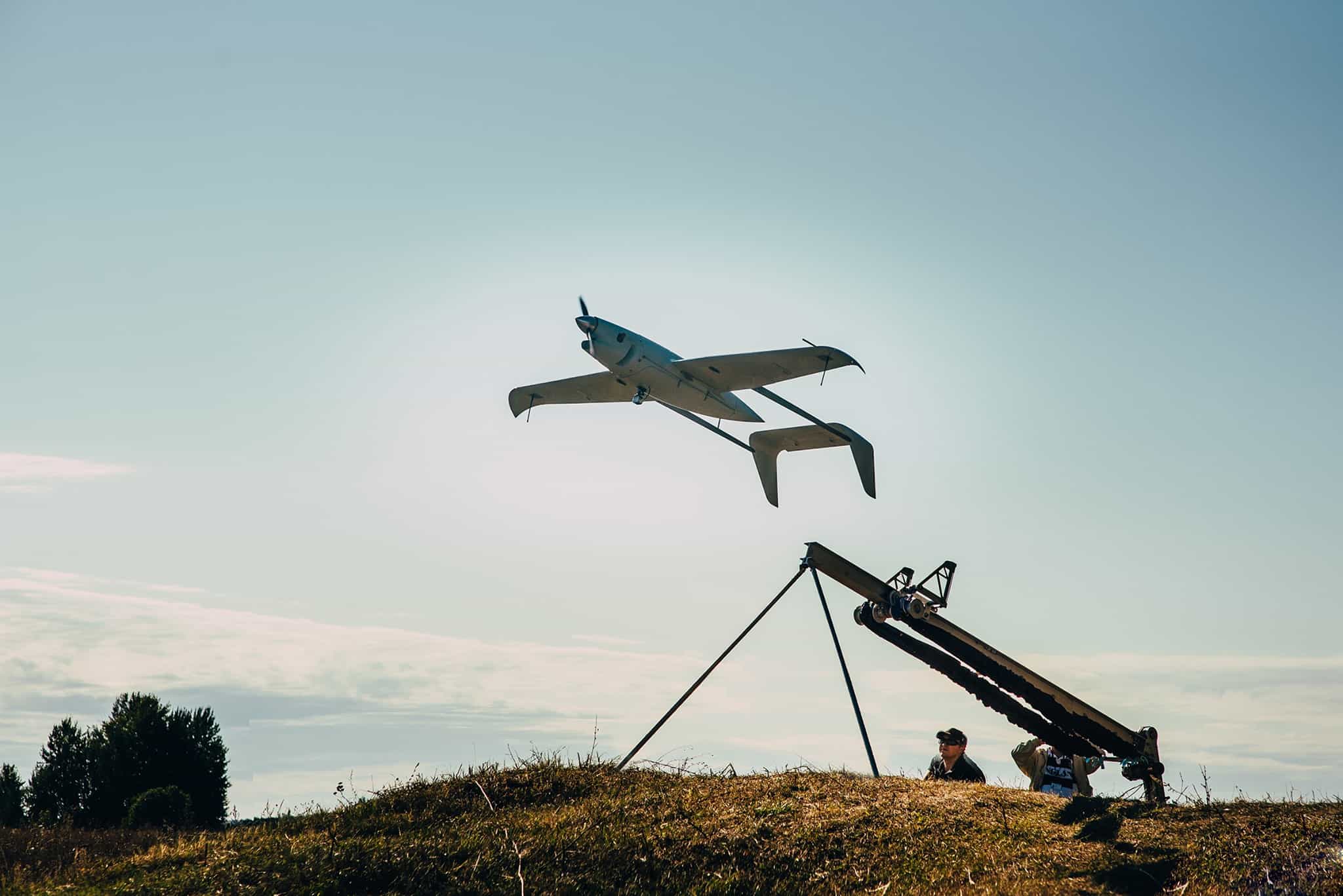
Skyeton, Inc. has received a $10.64 million contract to supply Raybird reconnaissance drones and related services to the U.S. Army.
The U.S. Department of War published the contract award notice.
The U.S. subsidiary of the Ukrainian company was the only supplier to respond to the solicitation. The estimated delivery completion date is December 15, 2026.
In late July 2026, it was announced that Skyeton, Inc. would build its first U.S. manufacturing plant in North Carolina.
The company is investing more than $3.1 million to convert a former Black+Decker plant covering more than 2,600 square meters near Fayetteville Regional Airport. The project is expected to create 162 jobs.
Rigoberto “Quito” Saez, Skyeton, Inc. CEO, shared that the move is aimed at “strengthening America’s defense industrial base and creating high-quality American jobs,” and thanked state and local partners, as well as the company’s mission partners at the Department of Defense, for supporting the expansion.
The project is supported by a $500,000 performance-based grant from the One North Carolina Fund, contingent on Skyeton meeting its targets for job creation and investment. It is supplemented by approximately $243,000 in combined incentives from the City of Fayetteville and Cumberland County.
This is not the Ukrainian company’s first overseas production facility. In July 2024, Skyeton launched production in Slovakia.
In addition, in July 2025, British defense company Prevail Partners and Skyeton announced the creation of a joint venture.
Raybird
Raybird (ACS-3) is a fixed-wing tactical unmanned aircraft system designed for long-endurance reconnaissance missions.
The Armed Forces of Ukraine have used Raybird systems since 2018.
Key specifications for the version with an internal combustion engine:
- flight endurance: more than 28 hours;
- maximum flight range: more than 2,500 km;
- operating ceiling: 5,500 m;
- communications range: more than 220 km or unlimited with SATCOM;
- engine: four-stroke fuel-injected gasoline engine;
- operating temperature: –35 C to +55 C;
- system deployment time: up to 25 minutes.
Raybird supports a wide range of interchangeable payloads, including multisensor EO/IR stabilized gimbals, SAR systems, a radio-frequency intelligence system, and other specialized sensors.
Source: Militaryni