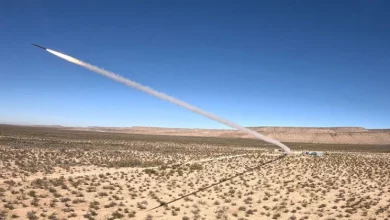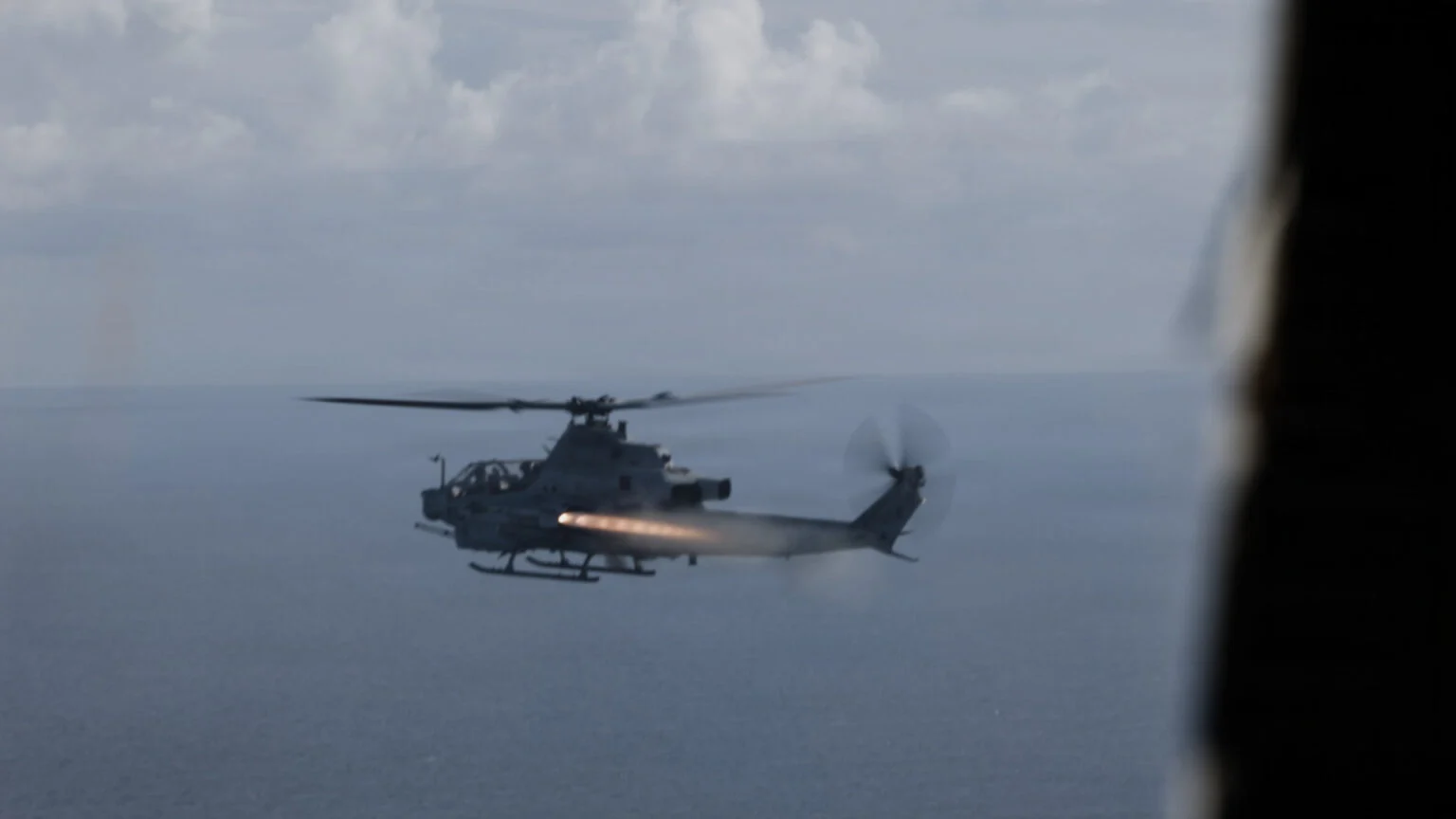
The U.S. Southern Command has reported that U.S. Marine Corps forces recently conducted an air-to-air missile exercise in the Caribbean Sea, using an AH-1Z Viper helicopter armed with an AIM-9 Sidewinder.
The live-fire training occurred on November 25, 2025, and was publicly announced by the command on December 3.
According to the announcement, the helicopter involved was part of Marine Medium Tiltrotor Squadron 263 (Reinforced), under the 22nd Marine Expeditionary Unit (Special Operations Capable). The unit is currently deployed in support of Southern Command’s mission to counter illicit drug trafficking and defend U.S. territory under Department of War directives.
The AH-1Z Viper, manufactured by Bell Textron, is a twin-engine attack helicopter designed to support the U.S. Marine Corps in a range of operations, including maritime interdiction and expeditionary warfare. It is one of the few helicopters in the U.S. inventory equipped to launch air-to-air missiles.
The AIM-9 Sidewinder missile fired during the exercise is a short-range, infrared-guided air-to-air munition. It has a flight range of up to 15 kilometers and a top speed of Mach 2.3. According to the command, the missile is equipped with a WDU-31B blast-fragmentation warhead weighing 25 pounds, making it effective against aerial drones and radar-guided surface-to-air missile systems.

The shoot was conducted while the unit was operating at sea, showcasing the Viper’s capability to detect, lock, and engage air threats while deployed aboard naval vessels or from remote forward positions. “This exercise underscores the multi-domain readiness of U.S. Marine Corps aviation assets in the Caribbean,” Southern Command said in its release.
U.S. Southern Command added that forward-deployed assets, such as the AH-1Z, support the president’s national security priorities in the region. These include joint interagency operations aimed at disrupting narcotics trafficking routes, deterring transnational criminal organizations, and maintaining persistent presence in maritime approaches to the homeland.
The AH-1Z’s ability to fire air-to-air missiles gives it a unique role among rotary-wing platforms. Beyond ground attack and close air support roles, the Viper can defend itself against enemy aircraft and engage aerial drones in contested environments. U.S. forces have increasingly emphasized the importance of short-range interceptors amid rising drone threats in global theaters.