The UK and Germany have signed a 52-million-pound ($70.1-million) joint procurement contract for artillery that can fire while maneuvering and neutralize targets more than 70 kilometers (42 miles) away.
Under the deal, London will receive an early prototype of the Remote Controlled Howitzer 155-millimeter (RCH 155) artillery system, while two additional platforms will be shipped to Berlin for joint testing.
Officials from both governments said the program strengthens NATO interoperability and supports collective defense amid a more contested security environment.
Both countries will share test data and facilities, accelerating procurement timelines while cutting expenditures.
“By working hand-in-hand with Germany, we’re not only accelerating the delivery of world-class artillery capability for the British Army, but doing so more efficiently and cost-effectively than either nation could achieve alone,” British Army Mobile Fires Senior Responsible Owner Edward Cutts stated.
The deal follows a separate $1.4-billion contract between the German government and the KNDS-Rheinmetall joint venture Artec for 84 RCH 155 systems.
The framework agreement allows for the delivery of up to 500 howitzers to the country and other partner nations.
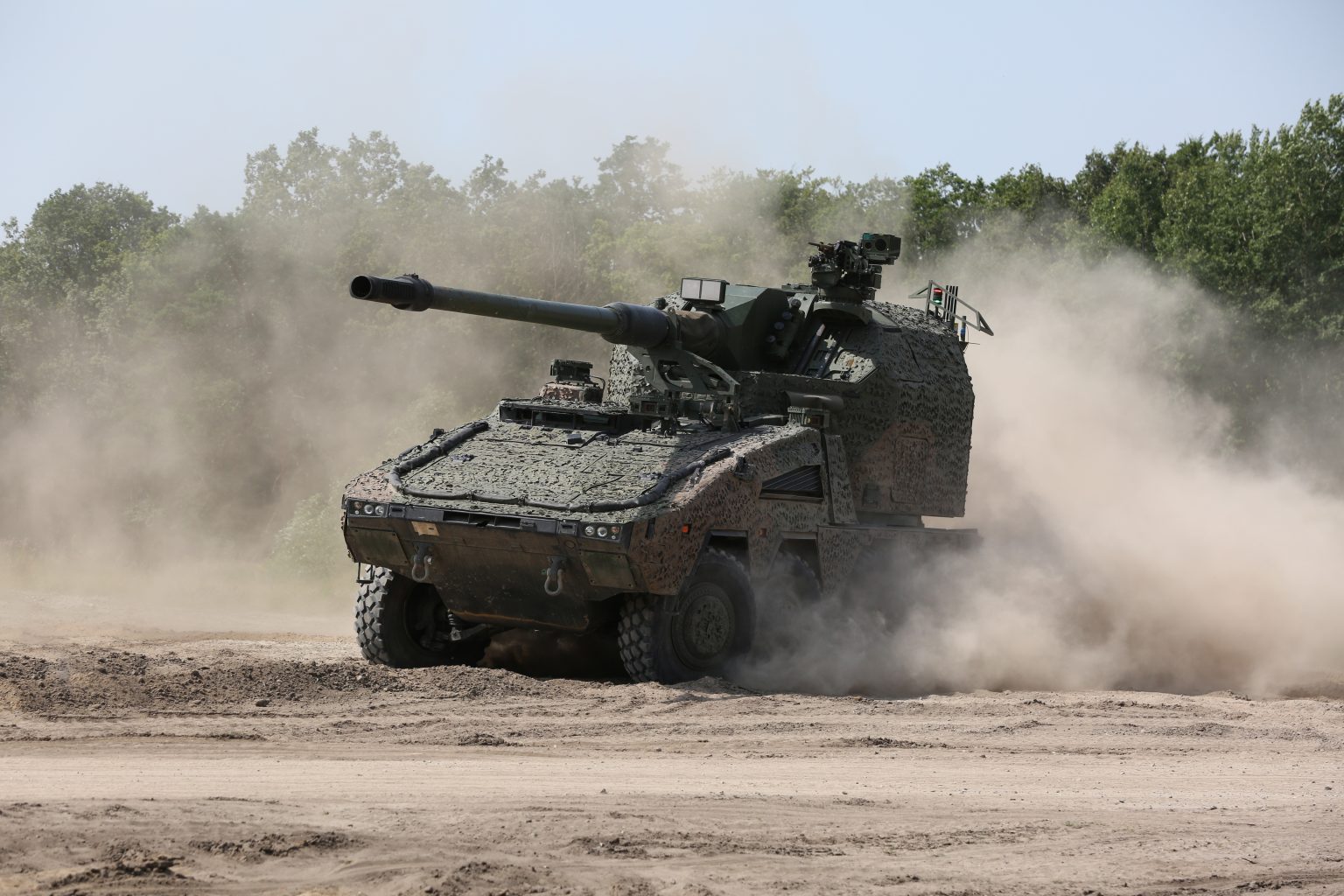
The Remote Controlled Howitzer 155mm
Mounted on a Boxer armored vehicle, the RCH 155 can fire eight rounds per minute while moving at speeds of up to 100 kilometers (62 miles) per hour.
It can engage targets in any direction without repositioning, operate with a crew of two through automation, and travel 700 kilometers (435 miles) without refueling.
The UK plans to field the RCH 155 as the British Army’s long-term Mobile Fires Platform, replacing interim Archer systems introduced after London donated AS90 artillery to Ukraine.
“The British Army will soon have new artillery that can fire on the move,” UK Defense Readiness and Industry Minister Luke Pollard said.
“The war in Ukraine has demonstrated the importance of being able to fire rapidly and move, and it is such lessons that are informing our procurement decisions and helping us deliver on the Strategic Defence Review.”