
Pentagon Launches $1B Program to Procure 300,000 Attack Drones
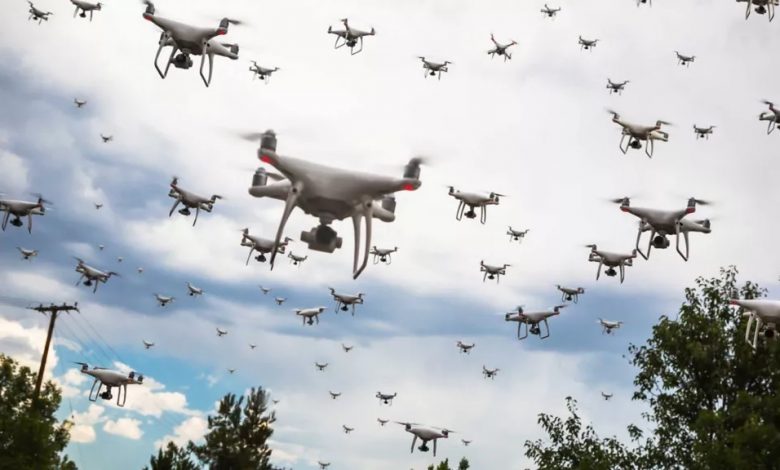
The US Department of Defense has initiated a $1-billion program to significantly scale up domestic drone manufacturing, targeting the procurement of roughly 300,000 systems over the next two years.
Known as Drone Dominance, the effort implements US Secretary of Defense Pete Hegseth’s July directive authorizing major changes to how the department procures and employs these systems.
The initiative is designed to reform the Pentagon’s traditionally slow acquisition process by creating predictable, high-volume demand to spur large-scale industrial production.
It aims to accelerate fielding by removing regulatory barriers to small unmanned systems and delegating key authorities to unit commanders.
“Drone dominance is a billion-dollar program funded by President Trump’s Big Beautiful Bill,” Hegseth said.
“It is purpose-built on the pillars of the War Department’s new acquisition philosophy: a stable demand signal to expand the US drone industrial base by leveraging private capital, paired with flexible contracting built for commercial companies, founded by our best engineers and entrepreneurs.”
Phased Program
The program will unfold across four six-month phases, known as gauntlets, beginning in February 2026.
In the first phase, the department is expected to order 30,000 one-way attack drones, with deliveries due by July 2026.
A total of 12 vendors will be selected from a pool of 25 and tasked with producing the initial 30,000 systems at $5,000 per unit, representing $150 million in procurement costs for the opening phase.
Across the remaining three gauntlets, the vendor pool will gradually narrow from 12 to five, as procurement volume increases from 30,000 to 150,000 drones.
At the same time, the department expects economies of scale to drive the unit cost down from $5,000 to about $2,300.
Military Transformation
The request for information does not specify drone types, but the projected unit cost suggests first-person-view drones and small quadcopters similar to those widely used in Ukraine.
Ukraine can produce millions of drones annually thanks to reforms that transformed its Soviet‑era defense industrial base into an agile, commercially driven ecosystem focused on unmanned systems.
Expanded US drone production under Drone Dominance is expected to strengthen supply chains and allow the military to acquire the quantities it needs at sustainable prices.
“One of my priorities is rebuilding our military,” Hegseth said.
“We can’t do that by doing business the same way we have in the past. We cannot afford to shoot down cheap drones with $2 million missiles. And we must be able to field large quantities of capable attack drones ourselves.”