Croatian drone maker scales up for Pentagon demand
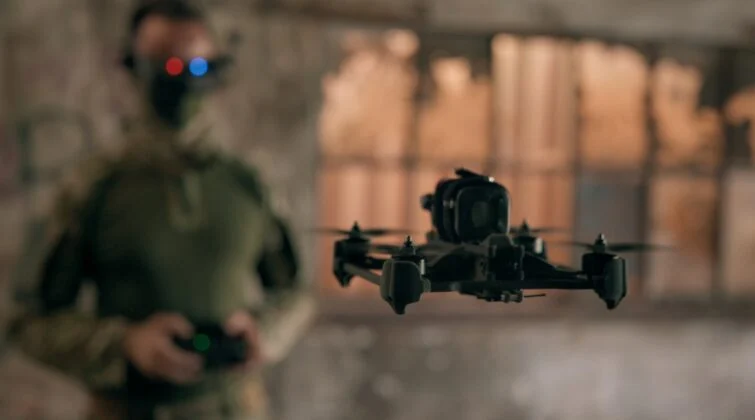

Orqa, a Croatian manufacturer of FPV and unmanned aerial systems, has expanded its production facility in Osijek to support an annual output of up to 280,000 NDAA-compliant drones.
In a statement on December 1, the company said the new capacity allows it to meet growing global demand for defense-grade drones free of Chinese components.
The company’s vertically integrated manufacturing model enables in-house production of all core components, including electronics and mechanical parts, ensuring full control over performance and security. According to the company, this model eliminates foreign dependency while aligning with Western security requirements.
“This milestone reinforces our conviction that Europe can build a secure and independent industrial capacity for defense technology,” said Orqa CEO Srdjan Kovacevic. “We’ve proven that high-performance drone production can be scaled outside of China, supporting the creation of resilient and trusted global supply chains. As demand accelerates, we’re ready to deliver securely and at scale.”
Orqa says the expanded facility enhances its engineering and assembly capabilities, enabling the firm to produce both its proprietary drones and high-performance components for selected industry partners. The company emphasized that it is prepared to meet both direct customer needs and those of global collaborators.
In addition to its domestic expansion, Orqa is establishing a decentralized manufacturing network by partnering with trusted firms in key international markets. These agreements, already signed, allow production to be localized abroad while maintaining the same security and performance standards, the company said.
All of Orqa’s drone systems—including the NDAA-compliant MRM2-10—are free of Chinese components and designed for electronic warfare resilience. In recent statements, Orqa executives have positioned the company to compete for large-scale U.S. defense contracts, especially under programs like the Drone Dominance initiative, which aims to field hundreds of thousands of small unmanned systems in the next several years.
The company has not disclosed the locations or names of its current manufacturing partners, but indicated that its international agreements are part of a long-term effort to help allied countries develop sovereign drone production capabilities.