
Indian Navy Looks to Match America’s MQ-4C Triton With Jet-Powered Drone
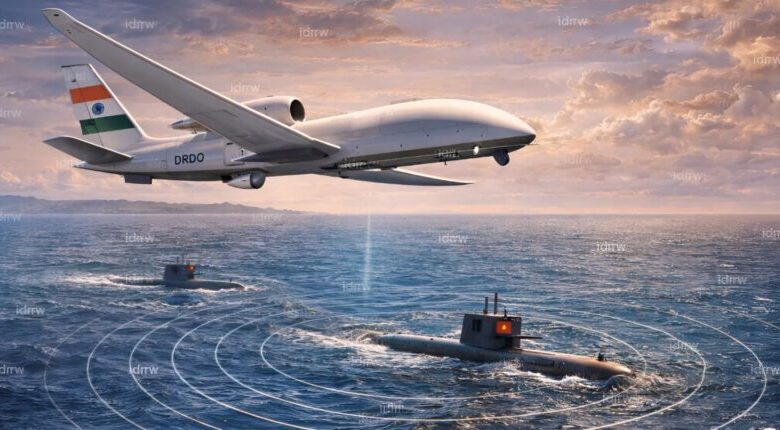
The Indian Navy is charting early plans for a jet-powered high-altitude, long-endurance (HALE) drone that could redefine how it monitors vast stretches of the Indian Ocean.
A future platform could integrate an active electronically scanned array radar, along with electro-optical, signals intelligence, and electronic intelligence payloads.
According to the Indian Defence Research Wing, the concept is expected to serve a role comparable to Northrop Grumman’s MQ-4C Triton.

The US platform operates at altitudes above 50,000 feet (15,240 meters) and has a range of 7,400 nautical miles (8,515 miles/13,704 kilometers).
With a 24-hour flight endurance, it can support long-duration missions in harsh environments and features de-icing capabilities to deal with extreme cold weather.
The Triton provides 360-degree coverage and is designed to deliver significantly expanded intelligence, surveillance, and reconnaissance (ISR) capabilities — features the Indian concept could aim to replicate.
India’s Indigenous Ambition
The Indian Navy has begun talks with the public and industry partners to evaluate the feasibility of an indigenous HALE-class platform with government funding.
While several companies are eyeing the HALE unmanned aerial vehicle segment, most current domestic efforts focus on propeller-driven designs.

A shift toward jet-powered systems could signal an emphasis on higher-performance propulsion and expanded operational capability.
The initiative reflects growing demand for advanced ISR assets across a maritime region stretching from the Strait of Hormuz to the Strait of Malacca.