Japan accuses U.S. of failing to meet $6.9B arms supply deals

Japan’s Board of Audit revealed in January 2026 that military equipment worth approximately 1.1 trillion yen ($6.9 billion) purchased from the United States under the Foreign Military Sales (FMS) program has not been delivered to the Japan Self-Defense Forces despite more than five years passing since contracts were signed.
The finding is detailed in an official audit report submitted to Japan’s parliament following a formal request from the House of Councillors. The report examined FMS contracts signed since fiscal year 2018 and found that 118 procurement cases remained incomplete well beyond their original delivery schedules. According to the Board of Audit, delays were primarily caused by U.S. manufacturers, forcing some Self-Defense Force units to continue operating older equipment as substitutes.
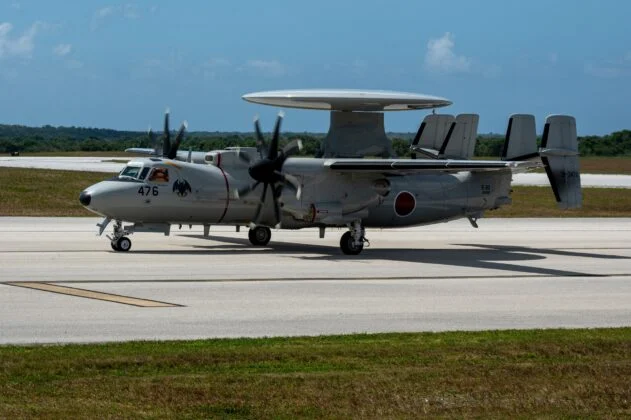
One of the most serious cases involved maintenance equipment for the E-2D Advanced Hawkeye early warning aircraft. The audit states that equipment scheduled for delivery within the original contract period had still not arrived years later, directly affecting the Air Self-Defense Force’s ability to maintain its airborne early warning fleet. The E-2D is a core asset used to monitor airspace and coordinate air defense operations.
The report explains that under the FMS system, delivery dates listed in contracts are only estimates and are not legally binding on the U.S. government. As a result, Japan had limited leverage to enforce timelines once contracts were signed and payments were made in advance. In many cases, the U.S. side unilaterally modified delivery schedules through administrative procedures without requiring Japanese approval.
According to the audit, Japan had already paid the full contract amounts for most of the delayed equipment, as FMS requires advance payment before production and delivery are completed. In several cases, funds remained unsettled for years while equipment had neither been delivered nor formally canceled. The Board of Audit noted that this created long-term financial exposure and operational risk for the Self-Defense Forces.
The audit report also highlighted structural problems within the FMS system. Contracts are managed by the U.S. government, which then places orders with American defense companies. Japan is not a direct party to those contracts and cannot directly negotiate with manufacturers. This structure limits transparency over production schedules, cost breakdowns, and delay reasons.
In its review, the Board of Audit confirmed that the Japanese Ministry of Defense had raised concerns with U.S. authorities multiple times but achieved limited progress in accelerating deliveries. The ministry was urged to strengthen oversight of FMS contracts and to improve tracking of delayed items to avoid operational gaps.
The report further warned that Japan’s growing reliance on U.S.-made systems—including aircraft, missiles, and support equipment—means that prolonged delivery delays could undermine readiness across multiple domains. The audit specifically cited cases where units had to keep aging systems in service longer than planned, increasing maintenance burdens and reducing operational efficiency.
The Ministry of Defense acknowledged the findings and stated that it would work with the U.S. government to improve schedule management and transparency. The audit recommended that Japan also reconsider whether FMS is always the most suitable procurement method, particularly for support equipment and spare parts that directly affect operational availability.
The FMS program is a cornerstone of U.S. arms exports to allies and partners. Under the system, the U.S. Department of War manages procurement on behalf of foreign governments, arguing that it ensures security, standardization, and interoperability. However, the Japanese audit shows that the system can create long delays when U.S. production capacity is strained or when American priorities shift.