Japan Air Force Buys First Texan II Jet Trainers From Textron
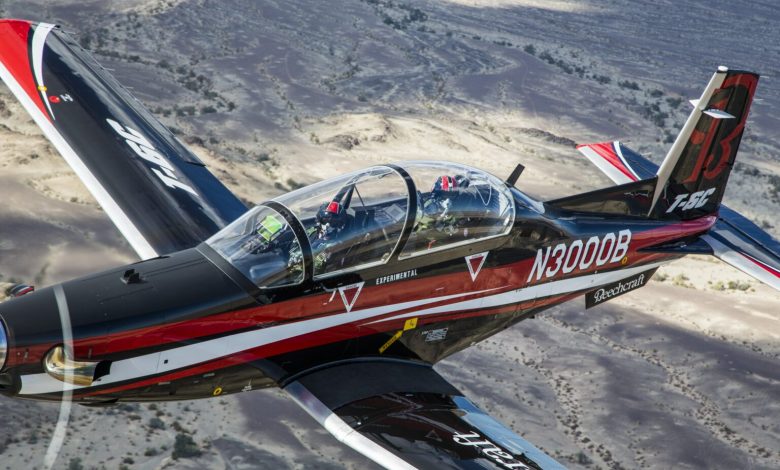
Textron Aviation Defense has signed a contract to deliver the first Beechcraft T-6JP Texan II training aircraft to the Japan Air Self-Defense Force.
The procurement follows the East Asian military’s selection of the system last January to replace its Fuji/Subaru T-7 fleet, which has been in service since the 2000s.
The deal covers the shipment of two planes along with pilot and sustainment training materials.
Textron will coordinate with Tokyo-based industry partner Kanematsu Corporation to hand over the jet trainers to the air force, with an expected delivery date for both platforms in 2029.
The Kansas-based company said that its agreement with Japan includes an option for additional orders.
“This contract marks a pivotal step in strengthening Japan’s next-generation pilot training capabilities,” said Travis Tyler, president and CEO of Textron Aviation Defense.
“We’re honored to support the Japan Air Self-Defense Force with a proven, interoperable training system that’s trusted by air forces around the world and tailored to meet Japan’s mission requirements for decades to come.”
Textron’s T-6 Texan II Aircraft
The Texan II is a two-seat plane built to prepare future pilots and ground crews in maneuvering and maintaining the more complex fighter jets.
Depending on course requirements, users can equip the plane with additional precision devices, an onboard virtual training data link, a digital terrain elevation system, and NATO-standard weapon systems.
The 33-foot (10-meter) long system flies with a Pratt & Whitney Canada PT6A turboprop engine with an output of about 1,100 horsepower and a four-bladed Hartzell propeller.
Texan II has a speed of 280 knots (322 miles/519 kilometers per hour), an operational altitude of up to 31,000 feet (9,144 meters), and a range of 900 nautical miles (1,036 miles/1,667 kilometers).
The platform has 1,000 units employed internationally with over 5 million flight hours achieved to date.
Including Japan, the Texan II now supports airborne competency programs in 15 countries and two NATO flight schools.