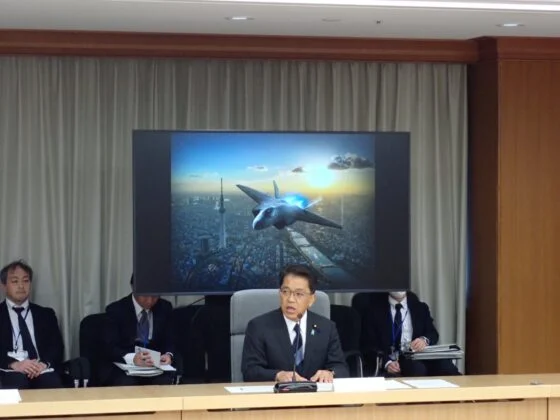
Japan’s Ministry of Defense said it has reviewed the latest progress and budget planning for its next-generation fighter aircraft program, as Tokyo continues close coordination with the United Kingdom and Italy on what is now known as the Global Combat Air Programme.
According to a statement released on December 26, Japan’s Vice Minister of Defense Masahisa Miyazaki convened the 11th meeting of the Next-Generation Fighter System Development Promotion Committee. During the meeting, officials reported on the proposed fiscal year 2026 budget related to the next-generation fighter, as well as the current status of development.
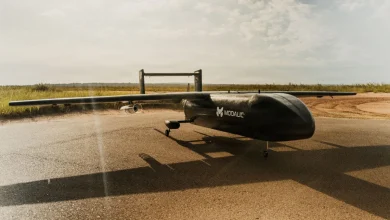
The ministry said the briefing also covered the fiscal year 2026 budget proposal and review status for unmanned aircraft designed to operate in coordination with the future fighter. These systems are intended to expand the overall combat capability of the next-generation air combat system rather than operate independently.
The ministry confirmed that Japan, the United Kingdom, and Italy will continue to work closely together to advance development toward the planned deployment of the first operational aircraft in fiscal year 2035. The trilateral effort brings together industrial and technological capabilities from Japan, Britain, and Italy under a single framework.
The program, widely known as GCAP, aims to combine capabilities from Mitsubishi Heavy Industries, BAE Systems, and Leonardo. The three companies are responsible for major elements of the aircraft and its supporting systems, with a shared focus on air-dominance missions and survivability in contested environments.
While the overall configuration of the airframe remains under development, officials have identified the propulsion system as a central element of the project. The advanced engine is expected to incorporate high-temperature materials, new thermal-management technologies, and extensive use of additive manufacturing techniques. These features are intended to support improved performance while reducing long-term maintenance demands.
Japanese defense officials have repeatedly stressed that propulsion and power generation are critical not only for flight performance but also for supporting advanced sensors, electronic warfare systems, and future weapons. The engine is expected to play a key role in enabling sustained operations in environments where aircraft may face persistent detection and engagement threats.
The committee meeting also addressed the integration of unmanned systems designed to operate alongside the fighter. These unmanned platforms are being studied as force multipliers that could carry sensors, conduct reconnaissance, or support strike missions under the control of manned aircraft. The ministry said budget planning and technical studies for these systems are continuing in parallel with the fighter program.
Japan has framed the next-generation fighter as a replacement for its aging fleet and a cornerstone of its future airpower. The aircraft is expected to enter service with the Japan Air Self-Defense Force, operating alongside allied platforms in joint and combined missions.
The GCAP initiative represents a shift from Japan’s earlier plans to pursue a largely domestic fighter program. By partnering with the United Kingdom and Italy, Tokyo aims to share development costs, reduce technical risk, and ensure interoperability with allied air forces.