Japan’s cabinet has approved a record-high defense budget for the next fiscal year, underscoring Tokyo’s push to expand military capabilities amid rising tensions with China and sharp criticism from Beijing over Japan’s space and missile programs.
The draft defense budget, approved Friday, exceeds ¥9 trillion ($58 billion), an increase of 9.4% from the current fiscal year, which ends in April. The move comes in the fourth year of Japan’s five-year plan to double annual defense spending to 2% of gross domestic product.
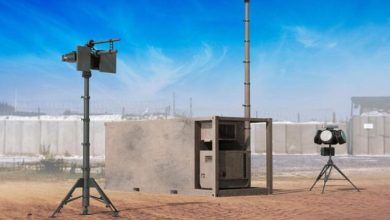
The budget prioritizes strike-back capability, coastal defense, and unmanned systems. According to defense ministry officials, Japan plans to strengthen its ability to respond to missile threats and protect its southwestern islands through expanded missile deployments and large-scale use of drones.
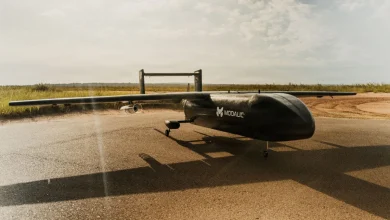
As part of the coastal defense effort, Japan will spend ¥100 billion ($640 million) to deploy “massive” numbers of unmanned aerial, surface, and underwater systems under a framework known as SHIELD, which is scheduled to be operational by March 2028. Officials said the unmanned systems will be used for surveillance and defensive missions along Japan’s coastline.
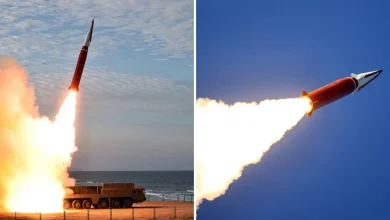
More than ¥970 billion ($6.2 billion) is allocated to enhance Japan’s long-range “standoff” strike capability. This includes ¥177 billion ($1.13 billion) for upgraded Type-12 surface-to-ship missiles with an extended range of about 1,000 kilometers. The first batch of the upgraded missiles is scheduled for deployment in Kumamoto Prefecture by March, one year earlier than initially planned, reflecting the pace of Japan’s missile buildup in its southwestern regions.
The budget also reflects Japan’s growing emphasis on unmanned platforms. Defense officials said drones are increasingly important given the country’s aging population and persistent recruitment challenges within the Self-Defense Forces. Initial drone deployments are expected to rely on imports, potentially from Türkiye or Israel, before domestic production expands.
The budget increase comes against the backdrop of worsening relations between Tokyo and Beijing. China has repeatedly objected to Japan’s defense expansion, arguing that it represents a shift away from Japan’s postwar security posture.
Tensions intensified last month after Japan’s prime minister, Sanae Takaichi, said Japan would likely become militarily involved if China attacked Taiwan as part of Beijing’s efforts to annex the island. The remarks drew a strong response from Chinese officials, who launched diplomatic and economic countermeasures. Takaichi declined to withdraw the comments, and the Japanese government said they did not represent a change in defense policy.
Chinese officials have since continued to criticize Tokyo’s military-related decisions. On Thursday, China’s Ministry of Defense said at a regular press briefing that Japan’s recent space technology developments, some carried out in cooperation with the United States, were “accelerating the weaponisation and militarisation of space, and fuelling a space arms race.”
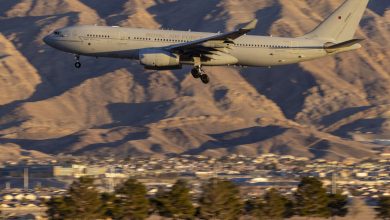
Beyond missiles and drones, the budget includes more than ¥160 billion ($1 billion) for the joint development of a next-generation fighter aircraft with Britain and Italy, with deployment targeted for 2035. Funding is also allocated for artificial intelligence-enabled drones designed to operate alongside manned aircraft.
The defense plan still requires approval by Japan’s parliament by March as part of a broader national budget totaling ¥122.3 trillion ($784 billion).