MQ-9 Reaper Gains Smart Surveillance Boost in Breakthrough Flight

Surveillance network tech is an airspace monitoring system, fuses multiple sensor types, tracks cooperative and non-cooperative aircraft, provides real-time airspace awareness, and supports counter-UAS operations.
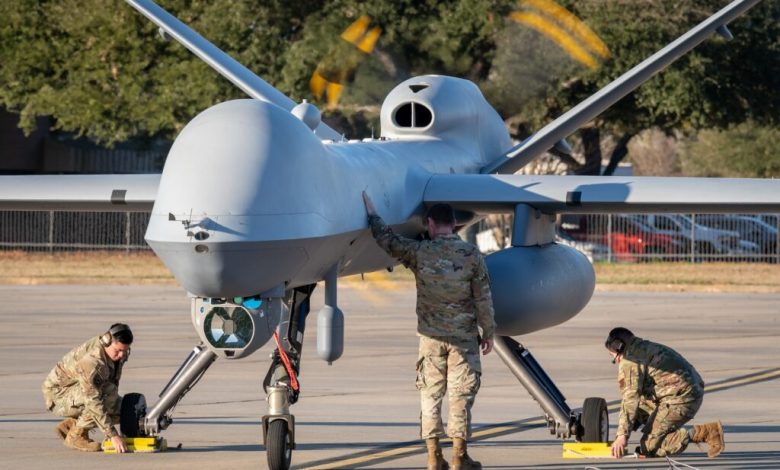
A breakthrough MQ-9 Reaper flight with NUAIR’s surveillance network has signaled a new chapter in how the US monitors and secures its airspace.
The system delivers real-time airspace awareness by fusing multiple sensors, giving operators a unified view of everything flying nearby — from transponder-equipped aircraft to signal-dark drones.
By creating a shared operating picture for military units, the network enables instant data exchange during complex or high-risk airspace operations.
“As the country prepares for major international events and faces evolving security challenges, NUAIR’s technology offers a proven solution for counter-UAS (unmanned aerial system) operations that has become a top federal priority,” the company stated.
The breakthrough flight took place at Syracuse Hancock International Airport and was facilitated by the 174th Attack Wing of the New York Air National Guard.
“The 174th has a long-standing history in the Central New York region and is proud to be a part of the innovation legacy here,” said Brigadier General John O’Connor, Commander of the 174th Attack Wing. “We look forward to working together with NUAIR to keep Syracuse’s airspace safe.”
US Airspace Modernization
The successful flight illustrates how rapidly deployable sensor networks can secure critical sites while also supporting commercial operations.
It also showed how third-party providers can expand Federal Aviation Administration (FAA) capabilities, strengthening security and enabling advanced air mobility.
“This demonstration directly addresses the White House mandate to restore American airspace sovereignty,” said Ken Stewart, President and CEO of NUAIR.
“Our surveillance network doesn’t just integrate unmanned aircraft — it actively identifies and tracks both cooperative and non-cooperative aircraft, providing the comprehensive domain awareness that national security demands.”