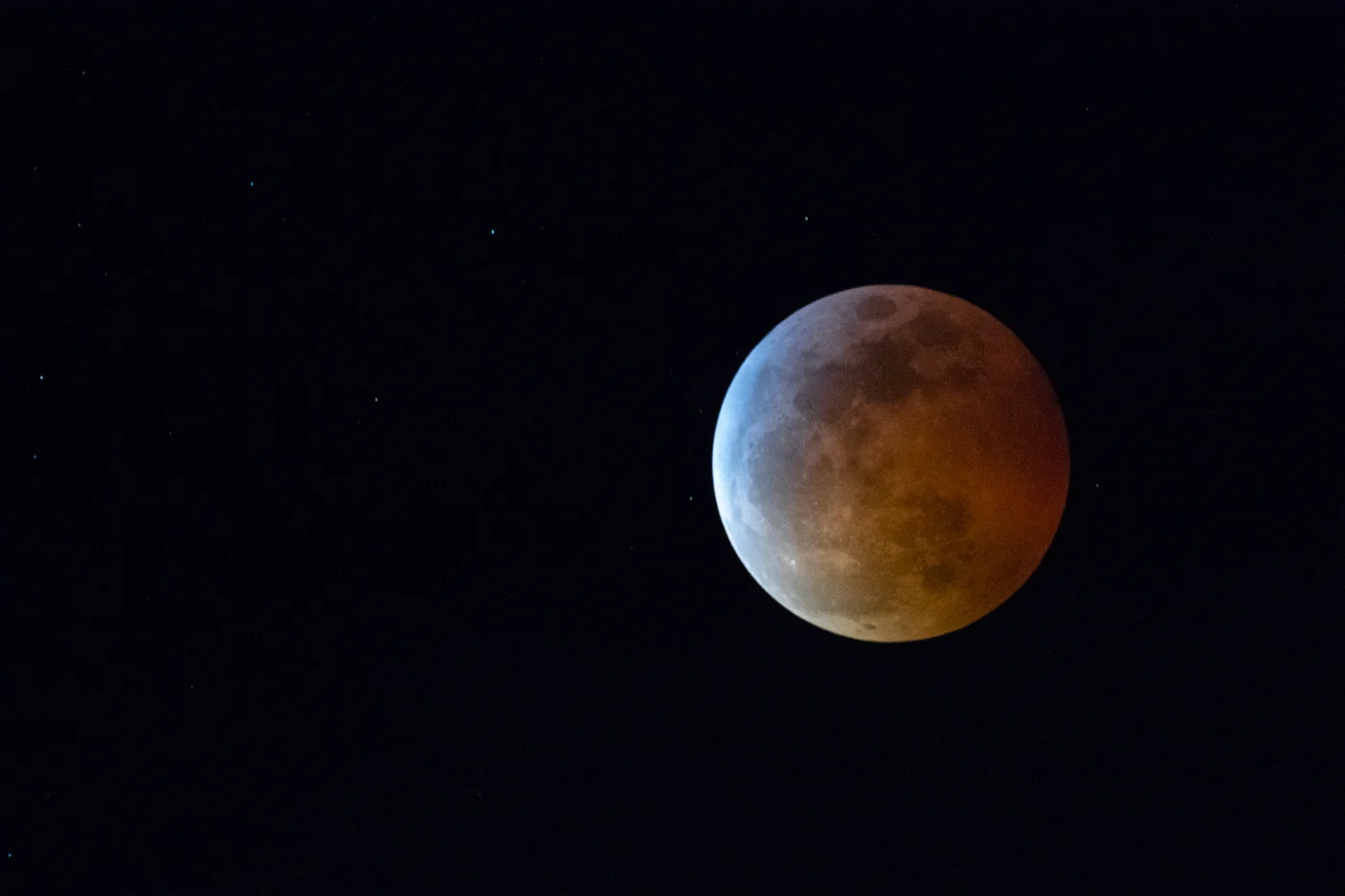
The Department of the Air Force wants up to five spacecraft that can each carry a government payload of as much as 2,000 kg (4,400 pounds) into the space between Earth and the Moon, with the first launch in late 2029, according to a request for information updated on the federal contracting site.
The notice describes a Cislunar Space System of “up to five (5) space vehicles” plus the ground stations, communications links and launch arrangements to run them. The spacecraft “may serve as seed vehicles” for “a potential future proliferated cislunar constellation,” it said. Companies have until noon on Nov. 24 to answer, in no more than 15 pages.
The department “intends to award up to five (5) Firm Fixed Price (FFP) preliminary design study contracts” after reading the responses, and it tells companies to assume that design work starts between January and March 2027. Air & Space Forces Magazine and Aviation Week were among the first to report on the notice when it was first posted on Nov. 2.
A payload limit of two metric tons and a requirement for U.S. National Security Agency Type 1 encryption suggest these would be working military satellites carrying classified equipment, a step up from the small experimental craft the U.S. Air Force has built for the region so far.
The 10-page memo lays out the spacecraft in some detail. Each one has to host a payload up to 3 meters (9.8 feet) long and 1 meter (3.3 feet) in height and width, and feed it at least 1 kilowatt of power, with 3 kilowatts as the goal. It has to last three years at minimum, with enough propellant and consumables for five.
The memo lists “Earth-Moon transfers, libration point orbits, resonant orbits, and low energy transfer trajectories” out to the Sun-Earth L1 and L2 points, which sit about 1.5 million km (930,000 miles) from Earth, roughly four times as far as the Moon. Libration points, also called Lagrange points, are spots where the pull of two bodies balances and a spacecraft can hold position with little fuel.
The spacecraft would also have to look after themselves. The department wants “autonomous operation for at least 72 hours,” a safe mode, and thrusters that can push in any direction for orbit changes and station keeping. One line asks companies about their experience using “Super Intelligence (SI) to manage autonomous SV operations over extended durations,” along with the onboard computing that would take. The memo doesn’t define the term.
The department wants a “rapid, low-risk” answer with as little new engineering as possible, and it defines low risk as a commercial or off-the-shelf design that “has demonstrated capability in the cislunar environment.” The spacecraft body, known as the bus, must be an existing design that the bidder has flown in the past three years, or one that will finish full assembly and testing within the next 24 months.
That narrows the field to companies that already build for lunar distances. The memo also asks for experience with classified government space programs.
Launch would be on a government-provided National Security Space Launch rocket, and the department wants as many spacecraft as possible on each one. It asks for “compact bus designs and innovative stacking and mounting techniques” and for drawings showing how several would fit inside a fairing.
To take a step back, the U.S. military has no operational satellites in this region today. Its work there has been research. The Air Force Research Laboratory started a program in 2022 called Oracle, earlier known as the Cislunar Highway Patrol System, and gave Colorado company Advanced Space a $72 million contract to build a spacecraft that would track objects near the Moon.
Oracle became two spacecraft and has slipped. The smaller one, Oracle-M, was due to fly this year. It is now expected in mid-2027 on a SpaceX Falcon Heavy after a change of launch provider, Aviation Week reported on Nov. 6. The larger Oracle-P, designed to sit at the Earth-Moon L1 point, passed its preliminary design review in December 2025 and is also aiming for 2027.
The U.S. Space Force has been building an organization around the mission this year. In April it set up a Cislunar Coordination Office to write a technology roadmap, Air & Space Forces Magazine reported. The same outlet has reported a separate $30 million research effort called Cislunar Prime, with contracts planned for spring 2027 in three areas: tracking objects, communications, and navigation.
Those three areas are the likeliest jobs for the new spacecraft, though the memo names none of them. The region is hard to watch from the ground. It holds 1,728 times the volume of the space out to geosynchronous orbit, and China plans to land astronauts on the Moon by 2030.
Companies that sit this round out may not get another chance. “Failure to respond to this RFI may result in loss of the ability to participate in a subsequent program acquisition,” the memo said.
Source: Defence Blog
-
-
-
-

-