RTX, through its Raytheon business, signed five long-term framework agreements with the U.S. Department of War to expand production capacity and accelerate deliveries of several core missile systems used by U.S. and allied forces.
According to a company statement, the agreements cover the Land Attack and Maritime Strike variants of the Tomahawk, the AMRAAM, Standard Missile-3 Block IB, Standard Missile-3 Block IIA, and the Standard Missile-6. The framework agreements run for up to seven years and are designed to support sustained increases in output as demand for precision-guided munitions continues to rise.
Under the agreements, RTX plans to raise annual production of Tomahawk cruise missiles to more than 1,000 units, increase AMRAAM output to at least 1,900 missiles per year, and expand SM-6 production to more than 500 missiles annually. The company will also accelerate production of the SM-3 Block IB and expand output of the SM-3 Block IIA interceptor. RTX said several of these systems will see production increases of two to four times current levels.
The company stated that the framework agreements build on earlier investments in facilities, workforce expansion, and manufacturing technology. Production under the new arrangements will be carried out at Raytheon facilities in Tucson, Arizona; Huntsville, Alabama; and Andover, Massachusetts.
“These agreements redefine how government and industry can partner to speed the delivery of critical technologies,” RTX Chairman and CEO Chris Calio said in a statement. He added that the contracts reflect the Department of War’s acquisition reforms and its focus on accelerating delivery of key capabilities to U.S. forces and partners.
RTX said the long-term structure of the agreements allows for a collaborative funding approach that supports sustained industrial investment while managing upfront cash flow. The company noted that the associated investments are already reflected in its 2026 financial outlook.
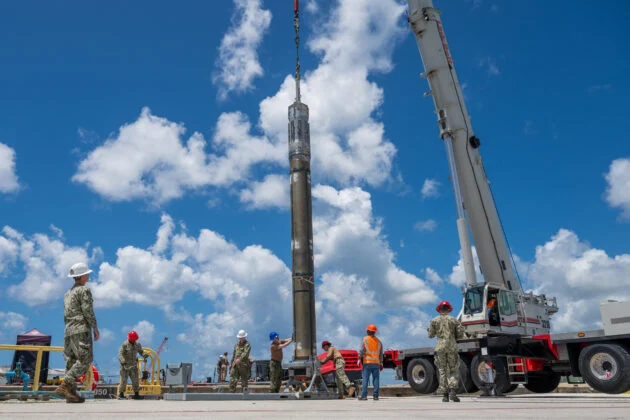
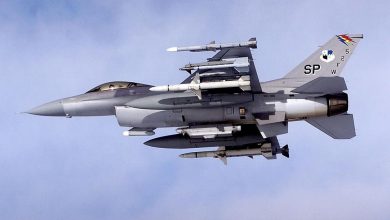
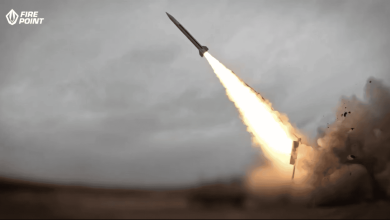
The missile systems covered by the agreements form the backbone of several U.S. and allied strike and defense missions. Tomahawk cruise missiles are launched from ships and submarines and are used for long-range precision strikes. AMRAAM serves as the primary air-to-air missile for many U.S. and allied combat aircraft and is also used in ground-based air defense systems such as NASAMS. The SM-3 interceptors provide exo-atmospheric ballistic missile defense from sea-based and land-based launchers, while the SM-6 supports air defense, anti-surface warfare, and terminal ballistic missile defense.
RTX said the agreements are intended to provide predictability for both the government and industry as production rates rise.
-
-
-
-
-