SCALP Missile Explained: Europe’s Deep-Strike Weapon
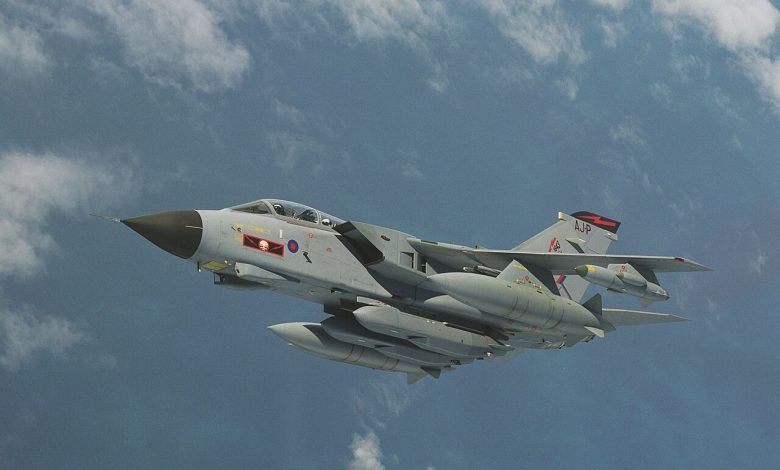
Far from the front line, long before enemy air defenses realize they are under threat, a strike has already been set in motion.
Built for modern, contested wars, the SCALP missile slips low and quiet through defended airspace, navigating terrain and defenses with a single purpose: to hit what matters most without risking aircraft or crews.
This explainer breaks down how the missile fits into today’s strike doctrine and outlines the specific purpose and role this technology plays in modern warfare.

What SCALP Is Built to Do
The SCALP missile, developed by MBDA in the late 1990s, is a long‑range, air‑launched cruise missile designed to strike high‑value fixed or fortified targets with precision and low observability.
It was created to give European air forces a stand‑off capability against heavily defended objectives such as bunkers, hardened command facilities, air bases, and critical infrastructure.
The SCALP missile flies at low altitude using terrain‑following navigation to minimize radar detection, then guides itself to the target with advanced imaging sensors.
Designed to emphasize survivability and precision rather than speed, it enables aircraft to strike from outside hostile air defense zones, reducing pilot risk while delivering early, high‑impact effects in a conflict.
| Category | Details |
| Full Name | SCALP (Système de Croisière Autonome à Longue Portée) |
| Alternate Name | Storm Shadow (UK designation) |
| Type | Air‑launched, long‑range stealth cruise missile |
| Manufacturer | MBDA |
| Country of Origin | France/United Kingdom |
| Operational Status | In service; production restarted mid‑2020s |
| Launch Platforms | Fixed‑wing combat aircraft, such as the Eurofighter Typhoon, Dassault Rafale, and Mirage 2000 |
| Primary Role | Deep‑strike against high‑value, well‑defended targets |
| Range | >250 kilometers (155 miles) |
| Speed | High subsonic; with a maximum speed of Mach 0.8 to 0.95 (987-1,173 kilometers/613-729 miles per hour) |
| Flight Profile | Low‑altitude, terrain‑following, stealth‑optimized |
| Guidance | INS/GPS mid‑course, Terrain Reference Navigation, Imaging Infrared terminal seeker |
| Warhead | 450-kilogram (992-pound) BROACH multi‑stage penetrator warhead |
| Launch Weight | ~1,300 kilograms (2,866 pounds) |
| Length | ~5.1 meters (16.7 feet) |
| Stealth Features | Low observable shaping, reduced radar signature |
| Accuracy | High precision (meter‑class CEP, estimated) |
Despite its strengths, the SCALP missile has several limitations that influence how and when it is employed in combat operations.
- Size and cost: SCALP is a large, expensive air‑launched weapon, limiting the number of missiles an aircraft can carry per sortie.
- Platform dependence: Its use is restricted to specific, compatible fighter aircraft, reducing flexibility across broader force structures.
- Subsonic speed: While designed for stealth and low‑altitude flight, it can be vulnerable to modern layered air defenses if detected.
- Target limitations: SCALP is optimized for fixed, high‑value land targets and is not intended for moving or maritime targets.
- Evolving competition: Its once‑dominant range is increasingly challenged by newer deep‑strike systems entering service.
As a result, SCALP is typically reserved for carefully selected strategic targets where precision and stand‑off safety justify its cost and specialization.

Global Use and Strategic Role
The missile has established a notable operational record across multiple conflicts.
More recently, the missile has been part of the ongoing Russia‑Ukraine conflict, with France supplying SCALP-EG and the UK providing Storm Shadow missiles to Ukrainian forces.
Deployed from aircraft, including Su-24 bombers, these missiles have enabled Ukraine to target fortified Russian infrastructure deep behind the front lines, significantly extending operational reach and demonstrating the strategic value of long-range, stand-off precision strike.
Beyond France and the UK, SCALP and its variants are in service with several other nations, including Italy, Greece, Saudi Arabia, and the UAE.
What’s Next for SCALP?
Rather than being phased out, SCALP remains central to long‑range precision missions, with renewed investment signaling confidence in its effectiveness against modern, defended targets.
At the same time, the UK and France are advancing work on a next‑generation successor under their Entente Industrielle program, aiming for an operational fielding in the early 2030s.
This future missile is expected to offer greater range, improved maneuverability, and expanded roles, potentially including enhanced anti‑ship capability.
Beyond the missile itself, SCALP’s evolution reflects broader strategic and industrial priorities. Ongoing efforts include possible integration on newer aircraft platforms, including fifth‑generation fighters, and adaptations to meet evolving mission profiles.