
South Korea unveils new laser combat vehicle
South Korea put its Cheongwang laser weapons on public display for its 78th Armed Forces Day on Oct. 1, showing two new prototypes for the first time, but a live demonstration of the system already in service ran into trouble before the laser burned two target drones out of the sky.
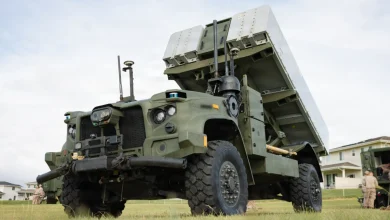
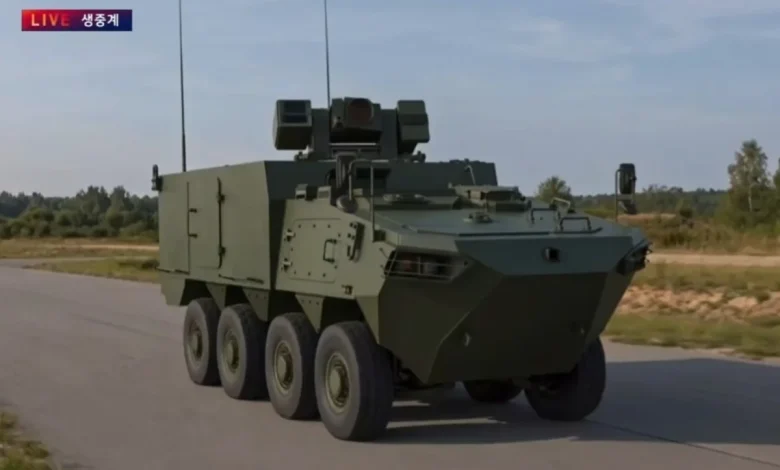
The new hardware included the Cheongwang Block 2, a prototype laser combat vehicle built on an 8×8 wheeled armored chassis, and a prototype 100-kW towed high-energy laser designed to shoot down incoming rockets, artillery shells and mortar rounds. South Korea has not said how far along either program is or when they could enter service.
The demonstration at Gyeryongdae, the military headquarters complex in South Chungcheong province, used the 20-kW Cheongwang Block 1, a fixed-site laser that has been in service since late 2024. Four target drones were prepared. The first crashed on takeoff after a gust of wind damaged the fiber-optic cable used to control it. The second could not complete its flight in poor weather and flew outside the designated safety zone, so the military cut its power and brought it down.
The remaining two drones flew into the laser’s engagement area, and Cheongwang shot both down, setting them on fire as they fell trailing black smoke. Because the other two never reached the laser, the demonstration does not show how well the system would perform against a larger group of drones or in tougher conditions.

Cheongwang works by holding a high-powered fiber laser on a small drone until the heat damages its airframe or key parts and it can no longer fly. The main attraction for militaries is cost. Hanwha Systems, which helped build the system, has put the cost of a single laser shot at about 2,000 won, roughly $1.40, compared with interceptor missiles that can cost hundreds of thousands of dollars or more. That figure covers only the electricity for a shot, not the cost of buying and maintaining the system, and a laser still needs enough power and cooling to keep firing.
The Block 1 was developed under South Korea’s Agency for Defense Development, making South Korea one of a small number of countries able to build its own laser weapon. South Korean officials say replacing an imported part, the laser oscillator that generates the beam, with a domestic one raised the system’s local content from 76% to 90% and increased its output from 20 kW to 30 kW. They also said the upgrade cut the time needed to bring down a small rotary-wing drone from two to four seconds to one to two, and for a fixed-wing drone from over 10 seconds to a few seconds. It is not clear whether the laser used in the Oct. 1 demonstration had the new oscillator.
The setbacks were not the first for South Korea’s unmanned systems at public events this year. On Sept. 16, several civilian drones, including a jet-powered one, crashed during an unmanned technology demonstration hosted by the Ministry of National Defense. In August, two medium-sized loitering munitions crashed into the sea during live-fire tests by the Republic of Korea Navy and the Agency for Defense Development aboard the amphibious assault ship ROKS Marado.
President Lee Jae-myung said at the Armed Forces Day ceremony that the government would speed up development of high-energy laser interceptors and artificial intelligence-based command and control systems.