SPYS Shahed Hunter Drone Upgraded, Reaches Speeds of Up to 500 km/h
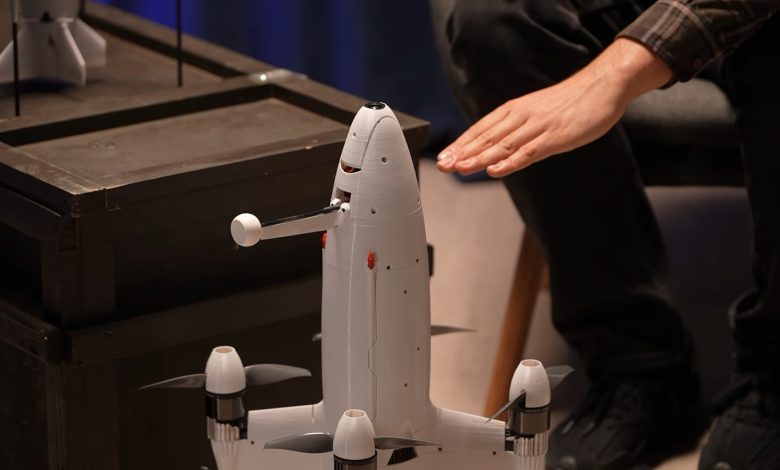
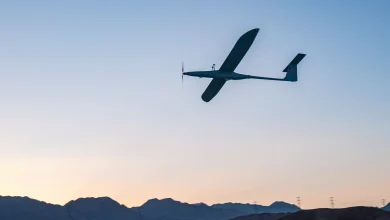
The Ukrainian company Quantum Wiy Industries has unveiled an upgraded production model of the high-speed SPYS interceptor drone.
A representative of Quantum Wiy Industries, the manufacturer of the SPYS and Strila interceptors, shared this information in an interview with Militarnyi.
The developers finalized the design and prepared the drone for industrial-scale production, incorporating feedback from combat crews who tested the first prototypes against jet-powered targets.
The key change in the updated drone is its aerodynamics, which directly contributed to improvements in all other performance characteristics.
The drone now features narrower wings, a redesigned forward fuselage, and repositioned air intakes.
The antenna’s placement and design have also been revised; in the previous version, it generated significant aerodynamic drag.
The color of the plastic fuselage has been changed from black to white. During operation, it became apparent that black drones could heat up to 80°C when exposed to the direct sunlight in summer, placing excessive thermal stress on their internal electronics.
“And this was unexpected, because the air temperature there might be 38–40, but in reality, a black drone sitting in the sun can heat up to 80,” said a company representative.
The fuselage continues to be manufactured using 3D printing to allow for quick design changes.
In addition, the design has also been adapted for mass production: the number of individual parts was reduced, the number of screw connections was increased, the drone was divided into modules for convenient quality control, and the ability to install interchangeable components (cameras, video transmitters, batteries, motors) from different manufacturers was incorporated.
Updated tactical and technical specifications
The takeoff weight of the updated SPYS is 4.6 kg—engineers managed to keep the weight down despite adding new onboard systems.
The weight of the warhead has been increased from 300 g to 500 g. Instead of improvised warheads that servicemembers previously installed themselves, it now carries a standardized, factory-produced high-explosive warhead with a standard fuze and a dedicated storage container.
Its primary mission is to damage the fuselage and disrupt the geometry of an enemy UAV, causing it to lose speed or triggering the detonation of its warhead.
The flight operational range (endurance) has been increased from 33 km to 45 km.
The sustained maximum speed exceeds 450 km/h.
“In fact, during our tests at the proving ground, we reached speeds of up to 500 km/h,” said a representative.
The power electronics have also been upgraded, making the drone more predictable at high speeds and allowing for its reuse — if a target is not found, the SPYS can return to land, recharge its battery, and take off again for another mission.
Automatic takeoff and automatic navigation to the target area have been added. Integration with radar stations and the Sky Map system allows the onboard software to calculate the probable interception point based on the target’s speed and trajectory, automatically guiding the drone there without operator intervention during the flight segment.
To operate in conditions where satellite navigation is jammed, a radio beacon system has been implemented that determines the drone’s coordinates using triangulation and automatically adjusts the ground control station’s antenna toward the interceptor to maintain a stable signal.
According to a representative of Quantum Wiy Industries, the local content of the updated interceptor reaches 70–80%; in particular, the drone is equipped with a Ukrainian thermal imaging camera.
The onboard computer also supports future software updates — the company plans to implement a function for automatically acquiring and intercepting targets on a head-on course in the future.
Source: Militaryni