
U.S. Army Deploys Dozens of Aerostats in the Middle East
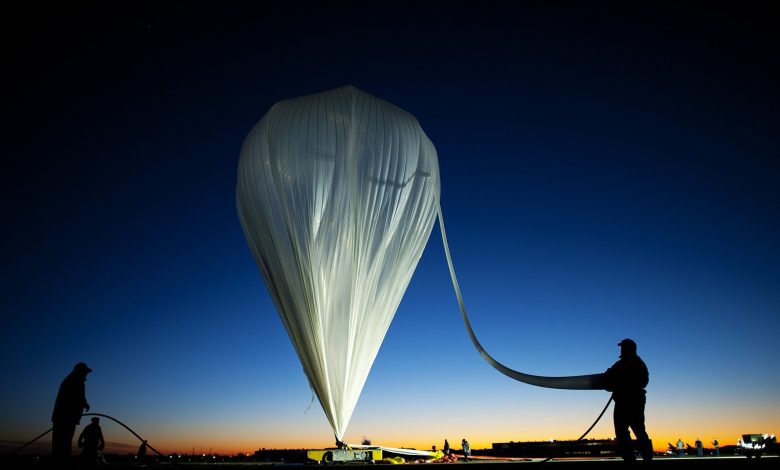
The U.S. Army has deployed dozens of high-altitude aerostats in the Middle East to support military operations.
Breaking Defense reported on October 12, citing Andrew Evans, head of the Office of Strategy and Transformation within the U.S. Army intelligence organization.
According to Evans, the aerostats successfully completed their assigned missions. However, the official did not disclose the specific locations where they were deployed or provide details about the missions.
To deploy them, the military revised plans for a large-scale experiment in the Indo-Pacific region, where it had planned to test more than 100 such systems in 2026. Instead, the military redirected the aerostats to support operations conducted by U.S. Central Command (CENTCOM).
The U.S. military operated dozens of these systems simultaneously, combining operational missions with testing. Previously, experiments typically involved launching only one or two aerostats at a time.
The deployment revealed challenges related to transporting and storing the systems. They proved sensitive to temperature, meaning local climatic conditions must be considered during operation.
Another challenge was the shortage of trained operators. Although suppliers provided substantial technical support, military personnel were expected to control the systems during operations. This experience raised questions about how responsibilities were divided between the Army and contractors.
Challenges also arose in coordinating airspace use. Evans did not provide further details but noted that the military had encountered similar problems before.
The manufacturers of the aerostats, the composition of their onboard equipment, and the duration of their flights have not been disclosed. It is also unknown whether they were used primarily for reconnaissance, communications support, or other missions.
The experience gained will inform the development of stratospheric surveillance systems. However, the U.S. Army has not yet selected a specific platform type. Evans identified aerostats, solar-powered gliders, and pseudo-satellites as possible options.
Militarnyi previously reported on tests of U.S.stratospheric aerostats in Poland during the Cold Raptor exercise. The aerostats launched from Powidz to test their reconnaissance, communications, and signal-relay capabilities.
On August 18, 2026, U.S. Army personnel reported that some systems reached altitudes of about 18–21 kilometers while carrying experimental equipment designed to expand communications and surveillance capabilities. During the exercise, military personnel also practiced launching the aerostats and controlling their flight from teams stationed at different locations.
Source: Defence Blog