
U.S. Army plans to buy a dozen new AH-64E Apache helicopters
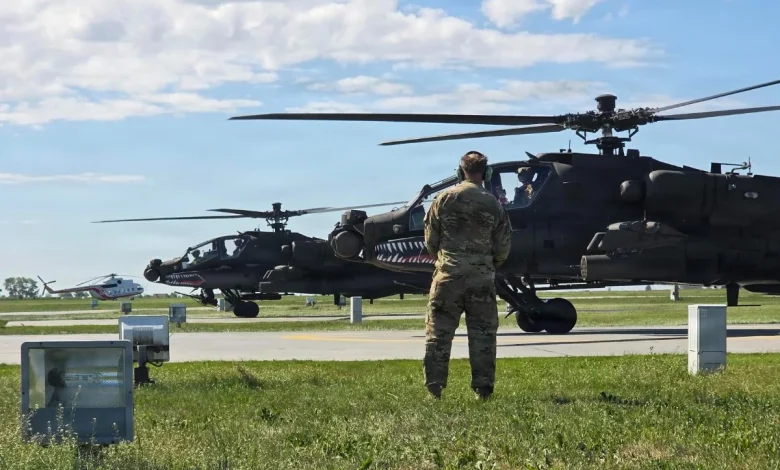
The U.S. Army Contracting Command at Redstone Arsenal in Alabama published a notice on Aug. 4, 2026, announcing its intent to award a sole-source contract, meaning a deal negotiated with only one company rather than opened up to competitive bidding, to Boeing for the production of up to 12 new AH-64E Apache attack helicopters, the Army’s primary heavy attack and reconnaissance aircraft used to strike ground targets and support troops in combat.
Boeing is the sole designer, developer, manufacturer, and systems integrator of the Apache aircraft, and the Army does not own a complete production-level technical data package, the detailed engineering blueprints and manufacturing instructions needed to build the helicopter, nor does it hold the rights to the proprietary data Boeing has developed over decades of building the aircraft. Without owning that information, the Army simply has no legal or practical way to ask any other company to build a functioning Apache, leaving Boeing as the only realistic source regardless of how many competitors might want the work.
The requirement calls for a new 53-month effort, folded into an existing contract already in place with Boeing, covering the remanufacture of up to 12 Apache aircraft alongside dedicated work to manage and fix obsolescence in critical electronic components, a process that can involve redesigning and requalifying parts that have become outdated or impossible to source as older technology ages out of production. Remanufacturing rather than building entirely new aircraft has long been the Army’s preferred approach for modernizing the Apache fleet, following the same model the service used decades earlier when it converted older AH-64A aircraft into the AH-64D configuration, and more recently when Boeing’s Mesa, Arizona production facility converted hundreds of AH-64D airframes into the more advanced AH-64E standard now flying across the Army and with allied militaries worldwide.
That upgrade path matters because the AH-64E represents a substantial leap over earlier Apache models rather than a cosmetic refresh. The aircraft carries a 30-millimeter cannon, 2.75-inch rockets, and both laser-guided and radar-guided Hellfire missiles alongside the newer Joint Air-to-Ground Missile, while its networked digital systems let crews control unmanned aerial vehicles directly from the cockpit and share real-time intelligence and targeting data across the broader Joint force rather than operating as an isolated platform. Boeing has continued expanding what the aircraft can do even as this latest procurement moves forward, with the company working toward integrating launched effects, small drones fired from the aircraft itself, directed energy weapons, and the Lockheed Martin-Rafael Spike NLOS long-range missile onto the AH-64E platform, including a test shot planned for later this year.
International demand for the aircraft has stayed strong enough to keep Boeing’s production lines busy well beyond what the U.S. Army alone requires.
The United Kingdom completed delivery of its full fleet of 50 remanufactured AH-64E Apaches earlier this year, while Australia, India, and Morocco have all begun receiving their first Apaches under separate international agreements, and Poland has finalized plans for a substantial purchase of 94 aircraft, figures that underscore why maintaining Boeing’s exclusive manufacturing relationship carries stakes for American allies as well as for the Army’s own fleet.
Source: Defence Blog