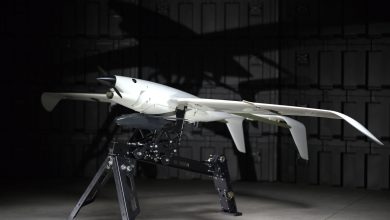

U.S. leadership inspects next-generation hypersonic strike weapon
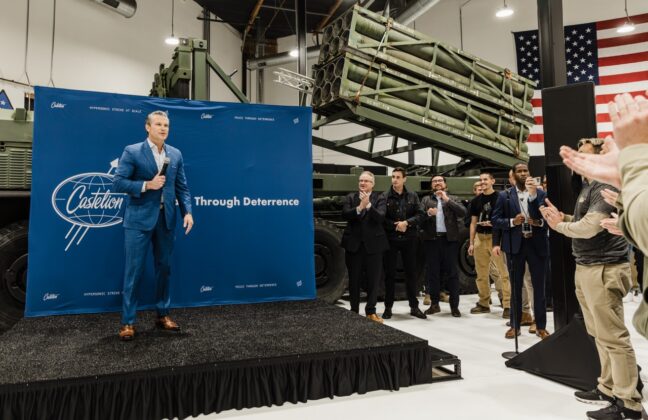
Castelion, a California-based defense technology firm founded by former SpaceX engineers, confirmed that Secretary of War Pete Hegseth visited the company’s headquarters this week.
According to the company, Hegseth met with engineers working on rapid-production missile technologies designed to restore industrial agility and increase the pace at which U.S. forces can field advanced weapons. During his remarks to employees, Hegseth said that if the United States wants to preserve peace through deterrence, “it’s going to require companies like this one, capabilities that you are building, to ensure that our adversaries think in their mind… not today.”
The company is developing the Blackbeard, described as a long-range hypersonic strike solution being engineered for mass production. As noted by Castelion, the weapon integrates vertically developed propulsion and guidance systems to reduce costs while preserving high-performance characteristics required for operational missions. Engineers briefed Hegseth on the effort to streamline design and simplify the production cycle to support rapid fielding timelines.
The visit included a demonstration of the Palletized Field Artillery Launcher, a modular system configured with four universal launcher pods intended to offer flexible deployment options across different service requirements. The launcher is designed to support rapid loading and firing cycles while using logistics infrastructure already available across U.S. forces.
According to Castelion, one of the program’s core objectives is to provide the U.S. with a scalable, affordable non-nuclear deterrence option that can be deployed quickly in response to evolving threats. The company said its approach emphasizes manufacturability, supply-chain resilience, and the ability to produce complex missile components with shorter lead times than traditional programs allow.
Hegseth’s visit comes as U.S. officials continue to underscore the need for long-range conventional strike systems that can be manufactured in volume and deployed across multiple theaters.
The firm described the visit as an opportunity to show how emerging private-sector programs can help address gaps in the current industrial base. Castelion said it aims to field systems that complement existing long-range strike capabilities while reducing dependence on legacy manufacturing networks.