UK delays Challenger 3 battle tank production
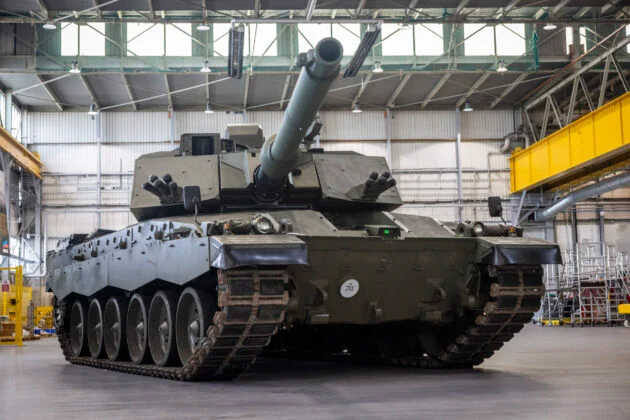

The UK Ministry of Defence has confirmed that manufacturing of the Challenger 3 main battle tank will not begin on a fixed timetable and will proceed only after performance trials are successfully completed, according to recent parliamentary disclosures.
UK Defence Journal has reported that, in written answers to Conservative MP Ben Obese-Jecty, defence minister Luke Pollard said the program is “currently undergoing demonstration phase trials to prove the performance of the tanks.” Pollard added that manufacturing will start once performance is validated, “rather than being tied to a specific deadline.”
The demonstration phase involves a limited number of vehicles used to validate design, integration, and performance against formal requirements. As of late 2025, only eight Challenger 2 hulls have been allocated to Rheinmetall BAE Systems Land for design, build, and testing activity, with series conversion yet to begin.
By avoiding a fixed production start date, the ministry is signaling a cautious, risk-managed approach intended to reduce the likelihood of downstream delays or capability gaps. Earlier planning assumptions pointed to Challenger 3 entering service later in the decade, but the latest parliamentary answers underscore that progress will be driven by trial outcomes rather than preset milestones.
Challenger 3 is a British fourth-generation main battle tank developed for the British Army through the conversion of existing Challenger 2 vehicles. The program is being delivered by Rheinmetall BAE Systems Land, with 148 tanks planned for delivery by 2030. The upgrade includes a new turret, improvements to the hull, modular armor, and provisions for an active protection system.
The program represents the most extensive overhaul of the UK’s armored forces in decades. The Challenger 3 effort aims to extend the operational relevance of the Army’s heavy armor while aligning with NATO standards and improving interoperability with allied forces.
The origins of Challenger 3 trace back to long-running efforts to extend the service life of Challenger 2. Initial work began in 2005 under the Capability Sustainment Programme, but funding delays and management challenges slowed progress. In 2014, the initiative was reorganized as the Challenger 2 Life Extension Programme, which led to competing proposals from BAE Systems and Rheinmetall.
After the merger of their UK land operations into Rheinmetall BAE Systems Land in 2019, Rheinmetall’s more ambitious design became the only practical option short of replacing the fleet with a foreign tank. The current disclosures confirm that the project remains firmly in the demonstration phase, with the transition to manufacturing dependent on technical results rather than calendar-driven targets.
Pollard said the project team will continue to reassess progress, noting that “the timeline [will be reviewed] regularly to ensure alignment with delivery milestones, operational needs, and emerging technical risks.” The comments suggest ongoing scrutiny of integration challenges and performance benchmarks before committing to full-rate production.