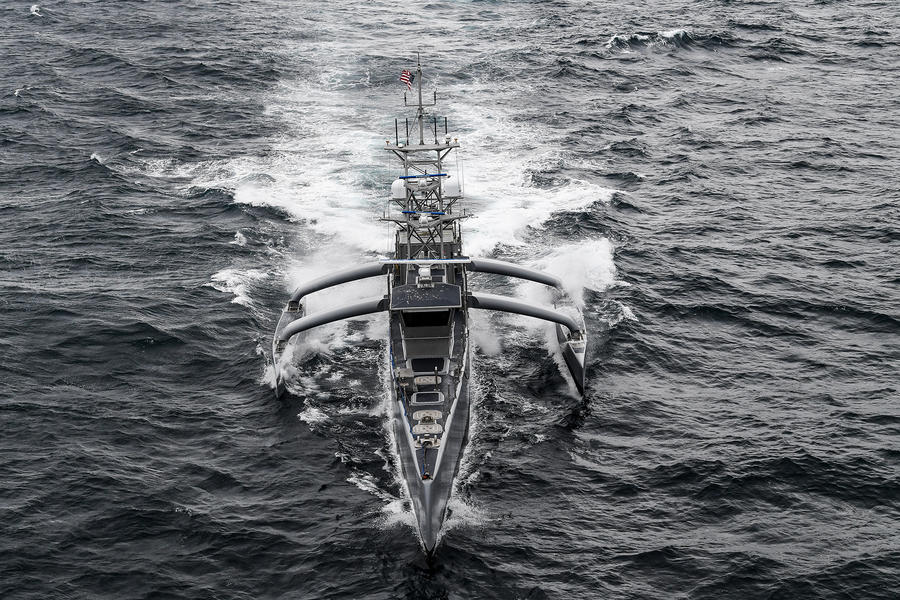
The US Navy is set to operationalize its first medium unmanned surface vessels (USVs), with Seahawk and Sea Hunter boats joining fleet control and three new USV divisions established soon.
Garrett Miller, commodore of Surface Development Group One, announced the moves at the Surface Navy Association’s 38th National Symposium, highlighting a push to integrate autonomous vessels into daily naval operations, according to a report by Military Times.
The Seahawk and Sea Hunter, both nearly 135 feet long (41 meters), will initially serve in surveillance roles and provide real-time data to manned ships, supporting anti-submarine warfare and reconnaissance.
Previously used in fleet exercises in 2022 and 2023, these medium USVs will now join operational units, with the Seahawk slated to be part of a carrier strike group.
Small USVs have seen dramatic growth in recent years, expanding from four units to hundreds across 2025 alone, according to Miller.
The navy has also created a dedicated warfare officer career path for unmanned systems and plans to acquire additional vessels capable of carrying containerized payloads for potential kinetic missions.
US Navy Expands Unmanned Surface Vessel Capabilities
The US Navy has steadily accelerated its investment in unmanned surface vessels, aiming to integrate autonomous systems across operational fleets.
In 2022, Leidos received a task order from the Naval Sea Systems Command to design and build a medium-size USV. This follows the delivery of a $35-million USV named Seahawk in 2021.
Textron Systems has also expanded its role, securing a contract in 2025 to provide software, payload integration, and testing for Mine Countermeasures USVs, strengthening the navy’s autonomous surface warfare capabilities.
In early 2026, Textron introduced a fifth-generation Multi-Mission USV engineered to transport more, extend its reach, and perform across diverse naval operations.