
Poland’s defense industry seeks role in Europe’s missile shield
Poland’s state-owned defense conglomerate is convening its entire arms industry around one table next week to answer a question with real stakes for the continent’s future: can Polish factories help Europe build a missile shield without depending on Washington to do it?
Polska Grupa Zbrojeniowa, known as PGZ, Poland’s state-controlled defense holding company that oversees dozens of domestic weapons manufacturers, announced that it will host a meeting on Thursday, Aug. 13, 2026, bringing together state and private defense companies, research institutions, and academic experts to explore how Polish industry can contribute to Europe’s developing ballistic missile defense capabilities.
“Polish industry already on August 13 discussing European ballistic defense!” PGZ said.
The meeting’s stated goal is to identify specific areas where Polish companies can bring their existing expertise to a broader European anti-ballistic missile program, and to work out a framework for continued cooperation, including with both European allies and Ukraine, according to PGZ’s announcement. That European program traces back to a joint declaration signed in Paris on July 13, 2026, when Denmark, France, Germany, Italy, the Netherlands, Norway, Spain, Sweden, Ukraine, and the United Kingdom formally launched what has since become known as the Anti-Ballistic Missile Coalition, a group explicitly built to strengthen Europe’s defenses against ballistic missiles, weapons that follow a high, arcing trajectory and travel too fast for many conventional air defense systems to reliably intercept. The coalition’s founding statement described the initiative as purely defensive and framed it as complementary to existing missile defense systems rather than a replacement for them, with French President Emmanuel Macron writing at the time that the effort reflects Europe’s determination to protect Ukraine, strengthen collective security, and build what he called the Europe of defense.
Notably, Poland was not among the coalition’s ten founding members despite sharing a border with Ukraine and sitting on NATO’s eastern flank, a gap Polish Prime Minister Donald Tusk has said reflects domestic industry still weighing its options rather than any Polish reluctance to participate in principle. PGZ’s Aug. 13 meeting appears aimed directly at closing that gap, positioning Polish companies to formally join the European effort’s industrial base even without full Polish government membership in the coalition itself, and Tusk separately confirmed that Poland will host the coalition’s first joint military exercises this autumn, drills expected to draw primarily French and British troops as participating nations prepare to eventually offer Ukraine concrete security guarantees.
“On August 13 we combine the potential of Polish industry and science. We want to jointly prepare a Polish offer for European ballistic defense,” PGZ said.
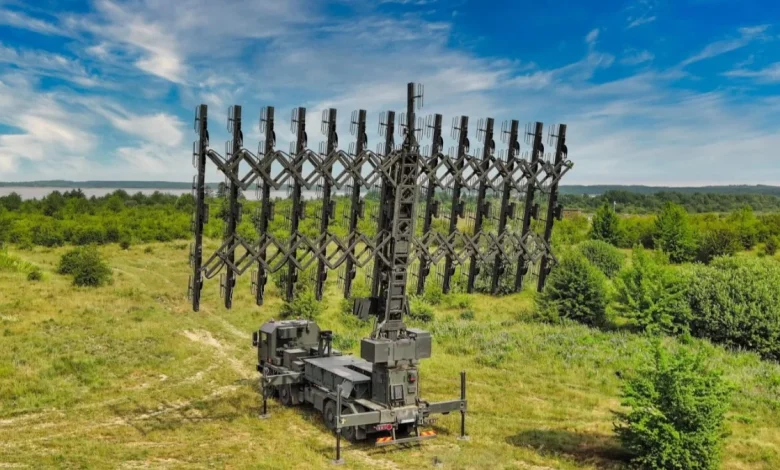
PGZ pointed specifically to sensors and threat detection and tracking systems as an area where Polish industry has built particularly strong competencies, technology that identifies an incoming missile and follows its trajectory closely enough to guide an interceptor toward it, a capability that sits upstream of the interceptor missiles themselves but proves equally critical to any functioning missile defense system. That expertise did not emerge overnight. Poland has spent the past decade building out its own layered air and missile defense architecture through three major domestic programs: Wisła, a long-range system built around the American Patriot missile that Poland has continued expanding and modernizing; Narew, a medium and short-range air defense program using British-made Common Anti-Air Modular Missiles; and Pilica+, a short-range system designed to protect against low-altitude threats including cruise missiles and drones. Building, integrating, and operating that layered system across three different missile classes has given Polish defense companies and researchers hands-on experience with exactly the kind of detection, tracking, and integration work the European coalition will need as it tries to design a shared continental missile shield rather than a patchwork of incompatible national systems.
The urgency behind Europe’s push traces directly to what officials have described as an alarming gap in the continent’s own defenses. European Commissioner for Defence and Space Andrius Kubilius said in March 2026 that ballistic missile defense represents Europe’s single biggest capability shortfall, noting that Ukraine alone faced 900 Russian ballistic missile attacks in 2025 while relying almost entirely on American-made Patriot systems to counter them, and NATO Secretary General Mark Rutte has separately called on the alliance to increase its overall air and missile defense capacity by 400 percent. Beyond the American Patriot, Europe’s only existing homegrown alternative is the French-Italian SAMP/T system built by the Eurosam consortium, a far thinner industrial base than officials believe the continent needs given the scale of the threat.
One especially ambitious element of the coalition’s plans centers on a system called Freyja, designed by Ukrainian startup Fire Point and built around the company’s FP-7.X interceptor missile alongside capabilities supplied by European partners, which Ukrainian President Volodymyr Zelenskyy has described as a Patriot-style system engineered specifically for cheaper, faster mass production, with claims the interceptor could cost roughly 80 percent less per intercept than the American-made PAC-3 munition Patriot batteries typically fire. Some officials involved in the effort have set an aggressive target of fielding the first working prototypes by the end of 2026, though Ukrainian officials working on separate joint production plans have estimated it could take 18 to 24 months just to stand up a first pilot production line, a timeline gap that underscores how much technical and industrial work still separates the coalition’s stated ambitions from an actual deployed system.
Source: Defence Blog