Germany to Establish Its First Drone Regiment, Equipped with Ukrainian-Made Drones and Missiles
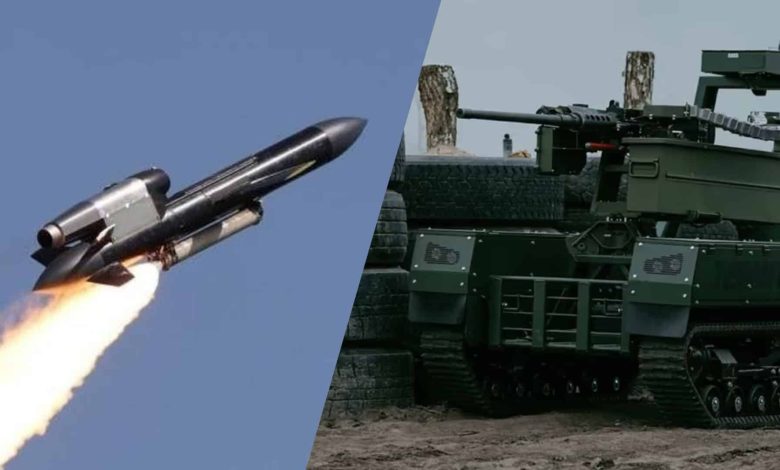
Germany is creating a new type of combat unit – the first drone regiment in the country’s history.
Internal government documents obtained by POLITICO reveal how the military plans to equip the Bundeswehr’s first specialized drone regiment.
The unit is expected to include reconnaissance drones, systems for jamming enemy signals, interceptor drones designed to counter hostile UAVs, and long-range strike systems.
The plans also include an unmanned aerial vehicle (UAV) capable of conducting reconnaissance at ranges of up to 2,000 kilometers.
The German Army plans to begin forming the regiment in 2027, with an initial strength of approximately 350 personnel. Its size is expected to increase to around 600 troops by 2029.
Germany Looks to Ukraine for Battlefield Experience
After years of supplying Kyiv with weapons and military assistance to counter Russia’s invasion, Berlin is increasingly turning to Ukraine for battlefield experience and defense technologies to help modernize its own armed forces.
This marks a shift in Ukraine’s role: from a recipient of Western military assistance to a defense partner helping Germany prepare for future warfare.
“Supporting Ukraine has long ceased to be a one-way street for Germany,” German Defense Minister Boris Pistorius said. He stressed that the Bundeswehr is drawing on Ukraine’s battlefield experience, particularly in the use of unmanned aerial systems (UAS) and military technologies.
Internal documents indicate that Germany has now moved beyond general statements and begun putting this concept into practice.
How the New Unit Will Operate
The internal organizational structure assumes the establishment of a six-company regiment, with each company assigned a specific combat role.
One company will operate close to German forces, conducting reconnaissance and striking targets in their immediate vicinity.
Another will be responsible for protecting the unit against enemy drones. Two additional companies will conduct operations deeper behind enemy lines.
The most distant targets will be engaged by a dedicated unit known as Deep Strike, tasked with identifying and destroying targets at maximum range.
The regiment will also have its own unit responsible for rapidly testing emerging technologies and integrating them into military operations.
According to Berlin’s estimates, procuring thousands of drones for the new regiment will require approximately €150 million.
What Weapons Will the Regiment Receive?
The proposed arsenal combines systems developed by Ukrainian manufacturers, products from Germany’s rapidly expanding drone industry, and technologies developed by a US company associated with one of Silicon Valley’s most prominent figures.
A significant proportion of the proposed systems have already been tested in combat, allowing Germany to draw on battlefield experience it seeks to incorporate into its own armed forces.
Seven of the nine systems listed in the documents are already in operational use in Ukraine.
Among them is the Termit unmanned ground vehicle (UGV), which is planned to be equipped with a heavy machine gun.
Three of the systems on the list were developed by US-based company Perennial Autonomy.
For troops operating close to the front line, the planned equipment includes the Vector reconnaissance UAV, manufactured by German company Quantum Systems and already in service with Ukraine, as well as the Bumblebee small strike drone, developed by Perennial Autonomy.
To protect the regiment against enemy unmanned aerial vehicles, the plans include the Merops system, developed by Perennial Autonomy – an interceptor drone designed to engage and destroy hostile aerial targets.
Merops was specifically developed for Ukraine to counter Iranian-made Shahed UAVs, which Russia has widely deployed in its war against Ukraine.
For operations farther from the front line, the plans include the Ukrainian-made Raybird reconnaissance UAV, which has accumulated hundreds of thousands of hours of combat flight time, and the Hornet strike drone developed by Perennial Autonomy.
In just three months this summer, Ukraine deployed more than 10,000 Hornet drones in strike operations.
Deep Strike to Be Equipped with Flamingo Cruise Missiles
For the Deep Strike unit, the military has planned a long-range reconnaissance UAV, as well as the Ukrainian-made Flamingo cruise missile, developed by defense company Fire Point.
According to the German document, the missile has a range of more than 2,000 kilometers. Ukraine is already using Flamingo missiles to strike targets deep inside Russian territory.
The German Army declined to confirm or deny the details of the internal plans. In an email, its representatives stated that the regiment’s final organizational structure is still under development.
However, the Army’s leadership has already indicated that the unit will continuously adapt to changes on the battlefield. The regiment’s in-house testing unit will bring together the development, testing, experimentation, and operational deployment of new technologies under one roof.
Source: Miltaryni