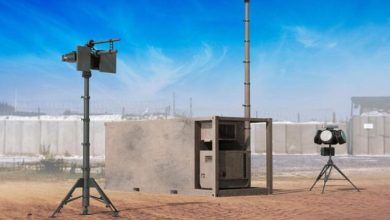
India has completed a long-duration ground test of its Actively Cooled Scramjet Full-Scale Combustor, a key propulsion component for future hypersonic cruise missile systems.
The initiative was carried out by the Defence Research & Development Laboratory (DRDL) in Hyderabad as part of India’s Defence Research and Development Organisation.
Conducted at the Scramjet Connect Pipe Test (SCPT) Facility, the test lasted over 12 minutes and validated the full-scale combustor’s performance and design integrity.
The combustor and the SCPT test facility were developed by DRDL with support from industry partners.
India’s defense ministry noted that the recent test marks a significant step in the country’s hypersonic missile development program.
Under the effort, New Delhi aims to develop missiles capable of sustained flight at speeds above Mach 5 (6,100 kilometers/3,800 miles per hour) powered by an air-breathing scramjet engine.
The engine’s supersonic combustion enables long-duration flight while maintaining performance.
Previous Tests
New Delhi views hypersonics as a way to field a fast, low-flying, and maneuverable strike capability that is harder to track than conventional ballistic missiles.
To advance that goal, India has been conducting a series of flight and ground tests over the past few years.
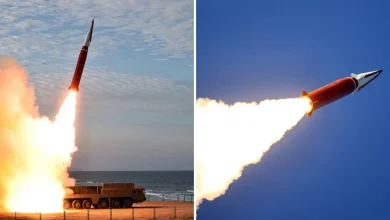
The recent trials build on previous efforts, including a reported launch in June last year of a new hypersonic missile capable of reaching Mach 8 (9,875 kilometers/6,140 miles per hour).
Known as the Extended Trajectory Long Duration Hypersonic Cruise Missile, the weapon has a range of about 1,500 kilometers (932 miles) and is powered by an air-breathing scramjet engine that uses atmospheric oxygen to sustain high-speed flight.
The first flight test of an Indian hypersonic missile was conducted in late 2024, when the weapon lifted off from Abdul Kalam Island off India’s east coast in the Bay of Bengal.