Japan has signed a new follow-on contract with Kongsberg Defence & Aerospace to acquire additional Joint Strike Missiles for its F-35A fighter aircraft.
According to information released on December 19, 2025, the agreement marks Japan’s fifth follow-on contract for the Joint Strike Missile, or JSM. The contract is valued at more than NOK 800 million ($79 million) and was concluded with Japan’s Ministry of Defense for delivery to the Japan Air Self-Defense Force.
“KONGSBERG is proud to have received another order from Japan’s Ministry of Defense to provide the JSM to the Japan Air Self-Defense Force. This is another great milestone for the JSM programme and our relationship with Japan is growing even stronger with this fifth follow-on contract,” said Øyvind Kolset, Executive Vice President Missiles & Space at Kongsberg Defence & Aerospace.
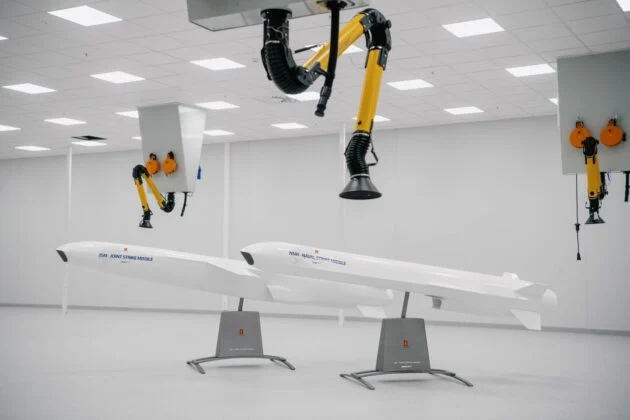
The JSM is a fifth-generation, air-to-surface cruise missile designed specifically for integration with the F-35A Lightning II. One of its defining features is the ability to be carried internally in the aircraft’s weapons bay, allowing the F-35A to retain its low-observable characteristics while conducting strike missions.
Kongsberg has positioned the JSM as a long-range precision weapon capable of engaging both land and maritime targets. While specific performance details were not disclosed in the announcement, the missile is intended to provide standoff attack capability against defended targets while operating within contested airspace.
Japan has been among the earliest international customers for the JSM, integrating the weapon as part of its broader F-35 program. Tokyo is one of the largest operators of the F-35A outside the United States and has steadily expanded its weapons inventory to support deterrence and regional defense missions.
With the latest order, Japan joins a growing group of JSM operators. According to Kongsberg, the missile has been selected by Japan, Norway, Australia, Germany, and the United States. The expanding user base reflects allied interest in weapons that can be deployed from stealth aircraft without compromising survivability.
The repeated follow-on contracts suggest Japan is moving beyond initial acquisition toward sustained procurement, aligning missile inventories with the scale of its F-35 fleet.
Kongsberg has emphasized that the JSM was developed to meet the operational needs of F-35 users, offering flexibility in mission planning and target sets. Internal carriage is viewed as especially relevant for early-phase operations, when aircraft are expected to operate against advanced air defenses.
For the F-35A, internal weapons such as the JSM are seen as central to preserving the aircraft’s low-signature profile, particularly in scenarios involving sophisticated sensors and air defense systems.