
U.S. Army orders more of its 55-year-old anti-tank missile
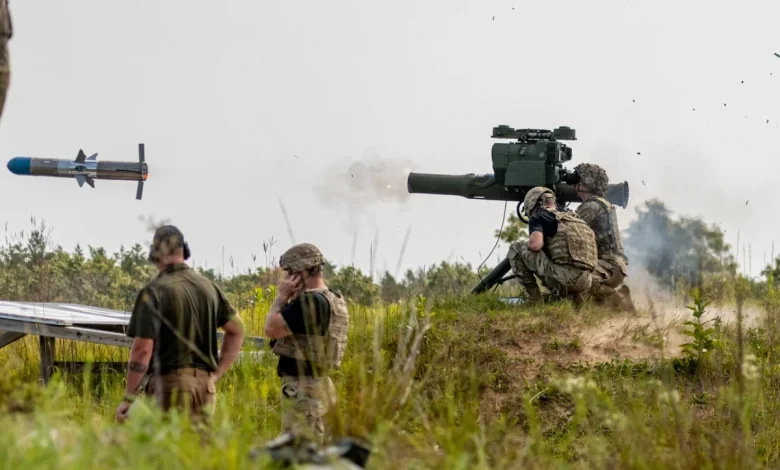
A missile that first destroyed tanks in the jungles of Vietnam more than five decades ago just landed another half-billion-dollar contract, and the Army plans to keep firing it well past the year 2050. The U.S. Army awarded Raytheon, the missile-making arm of aerospace giant RTX based in Tucson, Arizona, a $536 million modification to an existing contract covering full-rate production and engineering services for the TOW Weapon System, according to a Department of War contract announcement.
The modification pushes the total cumulative value of the underlying contract to $750,818,274, work that will be performed at Raytheon’s Tucson facility with an estimated completion date of Aug. 31, 2027.
TOW stands for Tube-launched, Optically tracked, Wire-guided, a name that describes exactly how the missile originally worked when Hughes Aircraft Company developed it in the 1960s: an operator fires the missile from a launch tube while keeping his optical sight fixed on the target, and a thin wire trailing behind the missile carried steering commands from the launcher all the way to impact. The weapon entered U.S. military service in 1970, making it more than 55 years old, and the Army has said it expects TOW to remain in the American arsenal beyond 2050, a service life that would eventually stretch past 80 years for a single weapon system, an almost unheard-of run for military hardware that typically gets replaced every few decades.
Raytheon has continuously upgraded the missile’s guidance, propulsion, and warhead technology since its introduction, most significantly in 2010, when the company replaced the original trailing guidance wire with a wireless radio frequency and microwave data link, letting an operator guide the missile to its target the same way, by keeping crosshairs fixed on the intended aim point, without the physical wire connection older TOW variants required. Current production versions include the TOW 2A and TOW 2B, along with an extended-range TOW 2B Aero variant and a TOW Bunker Buster designed specifically to defeat fortified positions rather than armored vehicles, giving Army units flexibility to select the right warhead configuration depending on whether they are targeting a tank, a bunker, or a fortified defensive position.
TOW is currently deployed with more than 40 international armed forces and integrated onto more than 15,000 ground vehicles, tracked vehicles, and helicopter platforms worldwide, ranging from Humvee-mounted tripod launchers to the Improved Target Acquisition System used on dedicated anti-tank vehicles, modified Stryker combat vehicles, and Bradley Fighting Vehicles equipped with an Improved Bradley Acquisition Subsystem, along with attack helicopters like the Marine Corps’ AH-1W Cobra. Raytheon has delivered more than 700,000 TOW weapon systems to the United States and its allies over the missile’s production history, with the TOW 2A alone accounting for more than 118,000 of those deliveries since entering production in 1987 and the TOW 2B adding another 40,000 units since 1991.
The United States included TOW-2 anti-tank missiles as part of a military aid package to Ukraine in January 2022, sending the weapon into active combat against Russian armor within weeks of Russia’s full-scale invasion, while Taiwan separately requested 1,240 TOW-2 systems from the United States in 2019 as part of its own effort to strengthen ground defenses against a potential Chinese invasion. Testing conducted during a program that began in 2011 saw the missile hit targets at ranges up to 2.5 miles (4 kilometers) with what Raytheon has described as flawless precision, and the company scored what it called its 100th consecutive successful TOW hit during testing in 2012, a perfect 100-for-100 record against test targets that underscored just how mature and reliable the missile’s guidance system had become decades after its original design.
This latest contract modification arrives as Raytheon has steadily ramped up TOW production capacity to meet growing demand from both the Army and international customers. The company has said its production line can manufacture up to 10,000 TOW missiles annually, capacity built up over consecutive fiscal year production contracts that included a $430 million award for fiscal 2023 and a separate $246 million contract for fiscal 2024, funding levels this new $536 million modification substantially exceeds, suggesting either an expanded order quantity, additional engineering work scope, or both layered into the current agreement. Fiscal year 2026 Army procurement funds covering $54,860,567 were obligated at the time of this specific award, a fraction of the modification’s total value that reflects how the Army typically funds large, multiyear production contracts incrementally as fiscal years unfold rather than committing the entire sum upfront.
Army Contracting Command at Redstone Arsenal in Alabama, the office responsible for managing missile and precision weapons contracts, oversees the deal, and Raytheon has separately signaled it wants TOW to remain compatible with the Army’s next generation of combat vehicles, including the service’s developing Optionally Manned Fighting Vehicle program meant to eventually replace the aging Bradley fleet.
Source: Defence Blog