
U.S. Army soldiers put the Rogue 1 reusable attack drone to the test
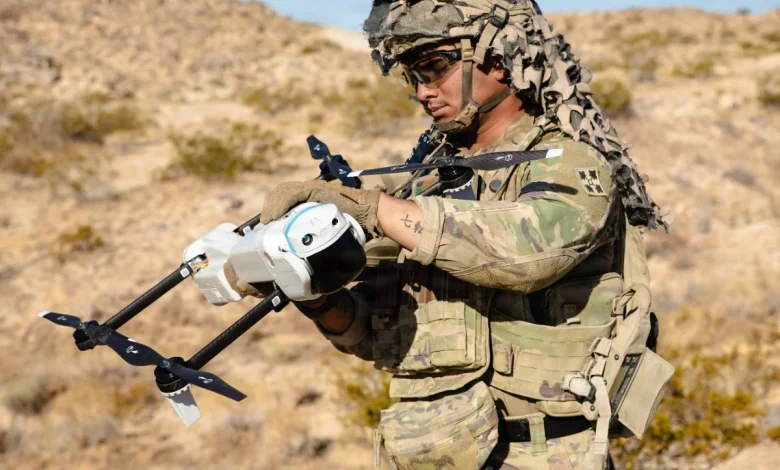
A soldier in the California desert flips a switch, and a small drone lifts off the ground carrying the ability to see through darkness and, if commanders choose, to strike a target without ever putting a human pilot in harm’s way.
That was the scene at Fort Irwin, California this summer, where soldiers from the 4th Infantry Division, a combat unit based at Fort Carson, Colorado, put a new unmanned aircraft called Rogue 1 through its paces as part of one of the U.S. Army’s largest technology experiments in years.
The testing took place during Project Convergence Capstone 6, a 10-day Army-hosted exercise that ran from July 20 to July 29 and brought together more than 9,700 participants from the American military, allied nations and the defense industry, according to reporting on the exercise. The event is directed by Lt. Gen. Michael McCurry, commanding general of the Army Futures and Concepts Command, the Army organization responsible for figuring out what the force needs to fight and win future wars before those wars actually happen. Soldiers tested roughly 100 developing technologies during the exercise, ranging from unmanned aircraft to experimental battlefield communications networks, all under realistic field conditions rather than the controlled settings a manufacturer might use to show off a new piece of equipment in a sales pitch.
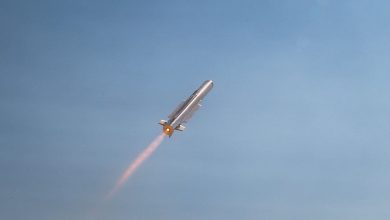
The drone at the center of this particular test, Rogue 1, comes from Teledyne FLIR Defense, a longtime maker of thermal cameras and surveillance sensors that has increasingly moved into building the drones themselves rather than just the cameras that go on them. Rogue 1 is what the military calls a loitering munition, a type of drone that can hover or circle over an area for an extended period before either returning home or, in its lethal configuration, diving into a target and detonating on impact, essentially functioning as both a scout and a precision weapon in a single airframe.
The system can fly for roughly 30 minutes, hit burst speeds over 70 miles per hour (113 km/h), and operate at a range of more than six miles (10 km) in its original configuration, and Teledyne FLIR Defense unveiled an upgraded Block 2 version in May 2026 that doubles the operating range to more than 12 miles (20 km) and adds a new payload designed to punch through armored vehicles.

What makes Rogue 1 notable beyond its raw performance numbers is a design choice that sets it apart from many other lethal drones fielded in recent conflicts, an advanced fuzing system with a mechanical interrupt that lets operators safely recover and reuse the aircraft if a mission gets called off or a target disappears before the strike happens. That reusability matters on a battlefield where cheap, one-way attack drones have become disposable by design, because a system that can be recovered and flown again offers the Army more flexibility to test, train and adjust without burning through expensive hardware on every single flight. The drone has already seen real-world fielding success with the U.S. Marine Corps under a program called Organic Precision Fires-Light and with U.S. Special Operations Command, giving the Army a track record to draw on as it evaluates whether the system fits into its own future formations.

The larger purpose behind putting Rogue 1 in front of 4th Infantry Division soldiers connects to a bigger Army modernization push centered on something called Next Generation Command and Control, or NGC2, a complete overhaul of how commanders gather, share and act on battlefield information using a shared digital data layer instead of the older, more fragmented communications systems the Army has relied on for years. The 4th Infantry Division has served as the Army’s primary testing ground for NGC2 since the effort scaled up in 2025, running a series of exercises known as Ivy Sting and Ivy Mass at Fort Carson before graduating to a division-level test at Project Convergence Capstone 6, according to Army reporting on the initiative. Soldiers flying drones like Rogue 1 during the exercise were not just testing whether the aircraft itself works, but whether the information it gathers, whether that is video of enemy positions or the location of a strike target, can flow seamlessly into the broader NGC2 network so commanders elsewhere on the battlefield can see and act on it in near real time.
Army leadership has signaled the NGC2 push is already moving toward wider deployment beyond the 4th Infantry Division and the 25th Infantry Division, which has been running its own parallel testing effort called Lightning Surge at Schofield Barracks in Hawaii. I Corps, headquartered in Washington state and focused on the Asia-Pacific region, is next in line to receive the technology, according to Army officials, with lessons learned from soldiers at Fort Irwin feeding directly into how the system gets built out for that unit and others down the line.
Army Secretary Dan Driscoll has framed the entire modernization push in urgent terms, arguing publicly that the greatest risk facing the Army’s future readiness is not moving too quickly on new technology, but failing to move quickly enough while potential adversaries continue advancing their own capabilities.
Source: Defence Blog