
UK to Build Hybrid CCV Fleet to Counter Russian Activity
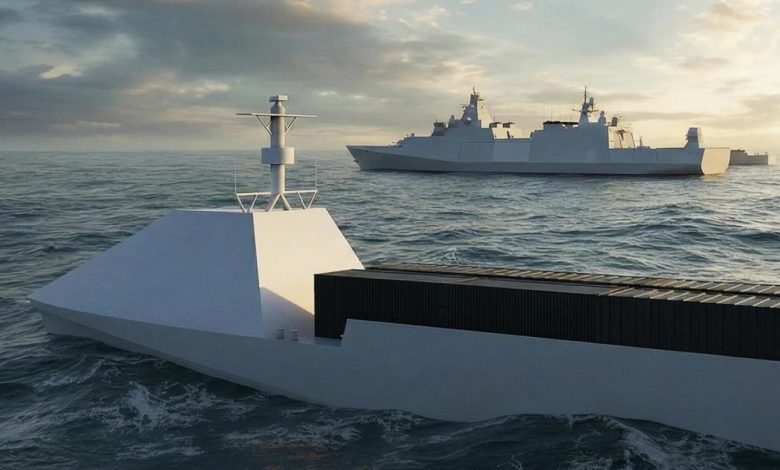
The United Kingdom will build six state-of-the-art ‘hybrid’ vessels capable of operating drones to counter Russian activity.
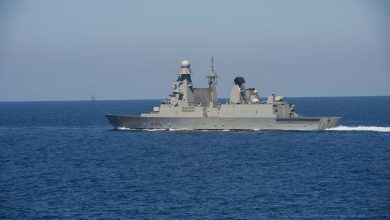
The new ships will replace six Type 45 destroyers, superseding earlier plans to develop the Type 83 destroyer.
According to the government, the Common Combat Vessel (CCV) will provide maritime air defense capabilities.
The CCVs will be the Royal Navy’s first ‘hybrid’ vessels, capable of coordinating drones operating in the air, on the surface, and underwater.
They are expected to enter service in the early 2030s.
“Rather than concentrating combat capabilities in a small number of large and expensive warships, the Royal Navy’s transition to a ‘hybrid fleet’ will combine crewed vessels with uncrewed systems, better matching the pace and nature of modern warfare,” the government said.
Funding allocated under the Defence Investment Plan will enable the project to move into the design phase.
Once commissioned, the CCVs will operate alongside:
- eight Type 26 frigates;
- five Type 31 frigates;
- Type 91 uncrewed missile platforms;
- Type 92 subsea sensor platforms;
- Type 93 extra-large uncrewed underwater vehicles (XLUUVs);
- Type 94 uncrewed sensor platforms.
This will constitute an investment in next-generation maritime capabilities on a scale unprecedented for the United Kingdom in recent decades.
The program will also underpin three new Atlantic initiatives: Atlantic Bastion, Atlantic Shield, and Atlantic Strike.
These initiatives are designed to counter Russian activity in the North Atlantic and the Arctic region.
The United Kingdom will also invest in new amphibious transport ships for the joint UK–Netherlands amphibious force.
Source: Militaryni